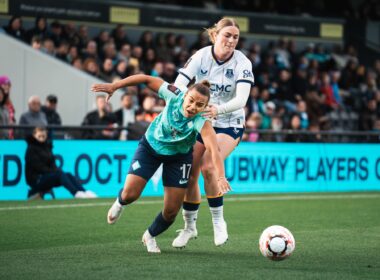
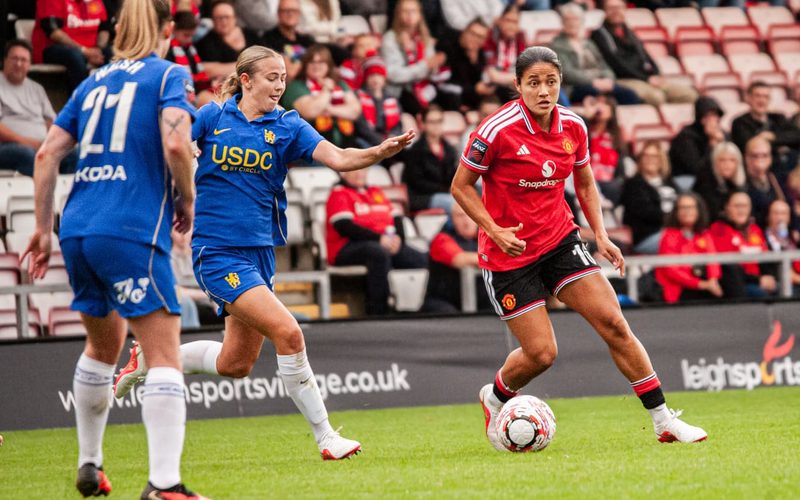
England manager Sarina Wiegman has challenged Ella Toone and Chloe Kelly to respond positively after leaving both players out of her latest squad, while Chelsea midfielder Lexi Potter has earned her first senior call-up.
The Lionesses face Greece in a two-legged World Cup qualifying play-off during the upcoming international window after finishing their group campaign with five wins and one defeat. With only the group winners qualifying automatically, England now face an additional hurdle to secure their place at the tournament.
Wiegman’s latest squad selection has therefore provided plenty of talking points, with the omissions of Toone and Kelly among the most notable. The England manager admitted both players had not reached the performance levels she expected at the start of the season.
“The main reason is that I think the levels weren’t what I expected from them on the pitch,” Wiegman said.
“I’ve had a conversation with them. And there’s a big competition going on too.”
The decision was not presented as a permanent judgement on either player’s international future. Instead, Wiegman hopes the omission will provide additional motivation for two established internationals to respond strongly at club level.
“I really believe in them,” she added. “We expect a bit more. And we know they can bring more.”
Wiegman wants both players to use the disappointment as an opportunity to raise their levels and force their way back into contention.
“I hope they respond to it really well; I hope they come back even better than they were before.”
Both will continue to receive support from their clubs and the England staff, but the message from Wiegman is clear: competition for places remains intense.
Potter Rewarded With First Senior Call-Up
While Toone and Kelly have been left out, Potter has gone in the opposite direction after earning her first senior England call-up following an impressive period of development at Chelsea.
Wiegman revealed that the 19-year-old has been closely monitored for around a year, with increased involvement at club level helping to push her into contention.
“Last season we already kept a close eye on her because she was already getting into the squad, getting playing minutes, doing really well,” Wiegman said.
“She started this season so well, and her performances have really impressed us. So, she really deserved this call-up.”
Potter’s performance against Arsenal was among those to catch the coaching staff’s attention, particularly her ability to perform against high-level opposition.
Wiegman also highlighted the midfielder’s confidence and composure, suggesting those qualities could allow her to adapt quickly to international football.
“She comes out on the pitch, and no matter who she plays against, she’s just going to play. And she’s comfortable,” she said.
Potter has increasingly operated in a deeper midfield role for Chelsea this season, with Wiegman viewing that position as one which currently suits her strengths.
The England boss primarily sees her as a holding midfielder but believes she has the intelligence to operate further forward when required.
“She shows a lot of intelligence and understanding where she needs to be at what point and how she collaborates with her teammates,” Wiegman added.
That versatility could also have tactical implications for established midfielder Keira Walsh, with Potter capable of occupying a deeper role and potentially allowing Walsh to move further forward.
Wiegman also pointed to Potter’s ability to shoot and her willingness to move into different areas of the pitch, giving England another option in possession.
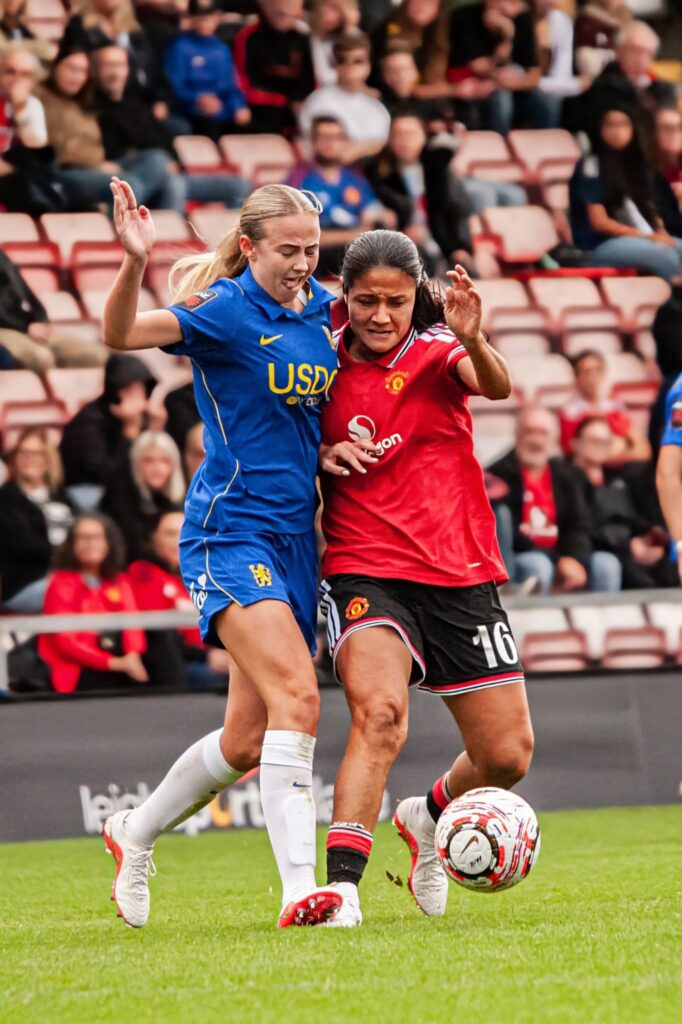
Lionesses’ Opt For Versatility In Attack
The absence of Aggie has also prompted questions over whether England would bring another specialist number nine into the squad.
Wiegman confirmed that the coaching staff considered the option before deciding that the versatility already available within the squad provided sufficient cover.
Players such as Beth Mead and Lauren James can adapt to a central striking role if required, giving England different solutions depending on how the Greece games develop.
“We have considered all of these things, and we came to this decision,” Wiegman said.
That decision is also linked to the expected nature of the play-off. England are likely to have significant possession against a Greece side expected to defend in a compact shape, making movement, patience and combination play particularly important.

‘We Have To Be Ruthless’
Creating chances will be one part of the equation. Taking them will be another.
Wiegman acknowledged that some players have had mixed starts to the domestic season, but stressed that England’s focus should remain on the factors they can control.
For her, that means looking beyond the final shot and examining the process which creates the opportunity in the first place.
“Are we in a good position? How do you create chances? Is the team connected?” she said.
“Are the players in a good position to create your chance and to score a goal?”
Against a compact Greece defence, England may need patience to move opponents around before exploiting spaces. Once those opportunities arrive, however, Wiegman expects her players to be clinical.
“Do we want to be ruthless? Absolutely, and that’s necessary too.”
Meaningful Minutes For Young Players
The press conference also moved beyond the immediate World Cup qualifying campaign, with Wiegman discussing the wider pathway for England’s emerging players.
She stressed the importance of regular, meaningful first-team football for players aged between 18 and 23, particularly as they attempt to make the transition into senior international football.
“When you’re at an age like, say, 18 to 22, 23, it’s so important to get meaningful playing minutes to develop,” she said.
However, Wiegman recognises the difficulty of creating those opportunities within the WSL. England wants its domestic competition to operate as an elite performance league rather than a development competition, meaning young players cannot simply be guaranteed minutes.
“We also want that the Women’s Super League to be the best league in the world so it’s not a development league, it’s a performance league,” she added.
That creates a challenge for younger English players competing for places at some of the country’s biggest clubs.
Wiegman suggested clubs, the FA and the players themselves all have a role in finding solutions, including considering moves that could provide regular first-team football when opportunities are limited.
For the players themselves, choosing a club based on the likelihood of playing can therefore be an important part of their development.
Support For Changes To Under-20 World Cup Scheduling
Wiegman also backed potential changes to the scheduling of the Women’s Under-20 World Cup, with the tournament sometimes conflicting with the domestic calendar.
That can leave clubs and international teams competing for the availability of young players, potentially preventing them from experiencing a major international tournament.
Wiegman believes moving the competition into a FIFA international window would allow more players to represent their country.
“Playing a World Cup with your peers, against peers of another continent, and being on such a stage; they’re all invaluable experiences for players,” she said.
While acknowledging the demands placed on clubs, Wiegman believes those international experiences are an important part of developing players for the senior game.
The issue ties into the wider player-development challenge she outlined, with meaningful minutes and exposure to different levels of competition both crucial to England’s long-term pathway.
Qualification Challenge
England’s route to the World Cup has become more complicated than expected after they finished their group campaign with five wins and one defeat but failed to secure automatic qualification.
Wiegman admitted there was disappointment at missing out on top spot, but insisted the team could not afford to dwell on what had already happened.
“We knew beforehand that this was the setup and that only the first in the group was going to qualify straightforwardly,” she said.
“We can’t look back.”
Instead, the focus is now on Greece and negotiating the two-legged play-off.
The squad selection reflects that immediate priority. Potter has been rewarded for her form and versatility, while Toone and Kelly have been challenged to respond to a drop in performance levels.

Questions Remain Over Wiegman’s Future
There also remain questions surrounding Wiegman’s own future, particularly with World Cup qualification potentially leading into what could be her final period in charge of England.
The manager confirmed that she continues to have regular conversations with Mark about both the present and longer-term planning, with those discussions taking place roughly every two weeks.
However, Wiegman insisted there was no new announcement regarding her position.
“We have regular conversations together, and we talk about the future at moments,” she said.
“But at this point I’m just really focusing on Greece, and we want to get through and qualify for the World Cup.”
Asked whether those conversations indicated that she wanted to remain in the role beyond the World Cup, Wiegman again played down any suggestion of a development in her position.
“We always speak,” she said. “There’s nothing new now. It’s just focusing on Greece and hopefully the World Cup.”
For now, that is where England’s attention must remain.
The Greece play-off represents the immediate challenge, with qualification now dependent on England delivering across two decisive fixtures.
Wiegman’s squad selection has simultaneously created an opportunity for Potter, placed greater pressure on Toone and Kelly to respond, and highlighted the manager’s continued focus on the development pathway beneath the senior team.
But ultimately, the objective is straightforward: England need to find a way through Greece.
Against an opponent likely to defend compactly, Wiegman wants her side to move the ball with purpose, create high-quality opportunities and, when those chances arrive, be ruthless.