
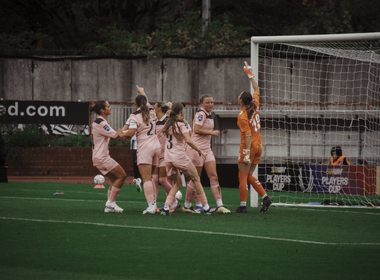
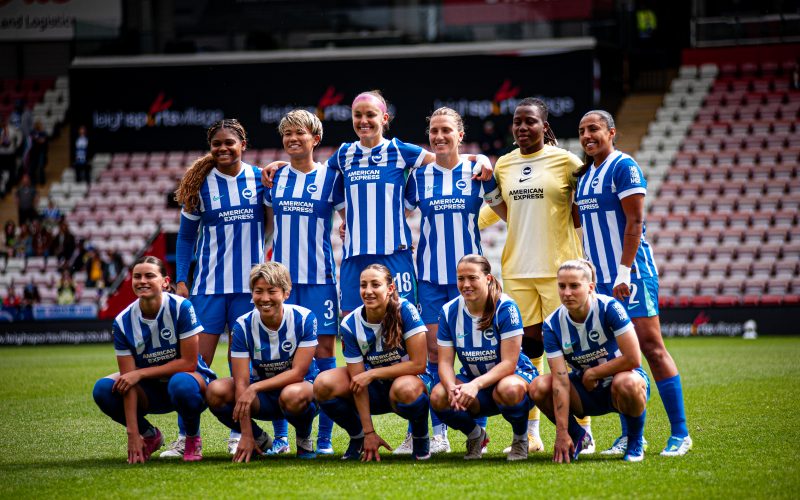
Brighton and Hove Albion are aiming to break into the top four of the Women’s Super League, continuing a long journey of growth that has seen the club rise from modest beginnings to competing at the highest level of the women’s game.
Women’s football in Brighton began to take shape in the early 1970s, despite the long-standing FA ban that had previously restricted the sport. In 1971, an Albion Ladies side was formed by the club’s supporters, entering league competition and quickly making an impression by reaching the semi-finals of the Women’s FA Cup. However, despite this early promise, the team eventually disbanded.
The foundations of the modern club were laid in 1990, when a local sports retailer became affiliated with Brighton & Hove Albion. This partnership led to the formation of Brighton & Hove Albion Women’s & Girls FC, marking a significant step forward in the club’s development. During this period, the team relocated to Sussex University for their matches before later moving to the Withdean Stadium, helping to establish a more stable identity.
By 1994, Albion were competing in the second tier of English women’s football and even hosted several matches at the Goldstone Ground, signalling growing recognition. The club also began to attract wider attention through its players, with talents such as Angela Banks going on to represent England internationally.
This progress was underlined in 1995 when Brighton won the inaugural Sussex Women’s Cup. Although they spent two seasons in the top flight, the team would later drop back into the second and third tiers, beginning a longer period of rebuilding before their eventual rise to the modern Women’s Super League.
A major shift in the women’s game came in 2011 with the formation of the Women’s Super League, followed by the introduction of a second tier in 2014. Entry into this new structure required clubs to obtain a licence, and Brighton were unfortunately unsuccessful in their initial application. As a result, they continued competing in the Women’s Premier League, where they continued to build momentum.
That progress was evident in 2015, when the club recorded a league attendance of 3,256 — a competition record at the time. Brighton carried that momentum into the following season, producing a title-winning campaign as they were crowned champions of the Premier League Southern Division.
Their promotion hopes then hinged on one final hurdle, and they rose to the occasion with an impressive 4–2 play-off victory over West Bromwich Albion, securing a historic place in the Women’s Super League for the first time.
Following promotion, the league reverted to a winter schedule, meaning Brighton’s first experience of WSL football came during the transitional 2017 Spring Series, a campaign without promotion or relegation. During this period, the team was briefly overseen by George Parris before the appointment of Hope Powell as permanent manager in September 2017, a significant moment in the club’s development.
In December 2017, Brighton were granted a top-flight licence, confirming their place within the top two tiers of English women’s football. They began their WSL 2 campaign with a victory away at Aston Villa, but ultimately finished as runners-up.
Due to further FA restructuring, the club was required to reapply for a licence to compete in the top division. Once this was secured, Brighton made another key step forward by relocating to their current home, the Broadfield Stadium, situated over 20 miles from their previous base in Hove.
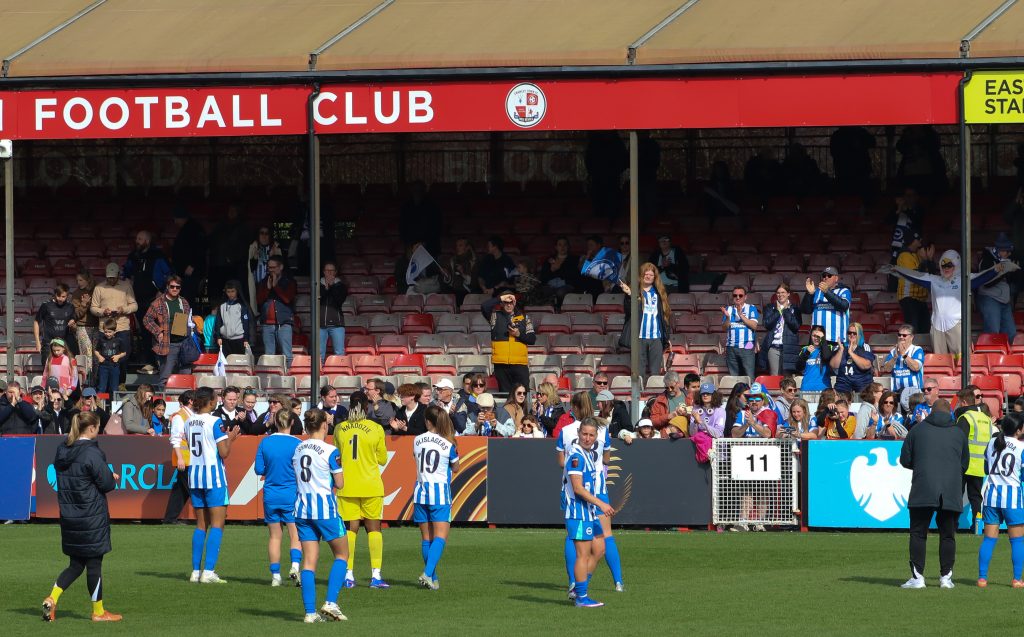
Brighton’s first full season in the Women’s Super League came in 2018/19, where they finished ninth with 16 points, recording four wins, four draws and 12 defeats. It marked a steady, if challenging, introduction to life in the top flight as the club adjusted to the demands of the competition.
The following season brought similar difficulties, with Brighton once again finishing ninth. However, the campaign was disrupted by the COVID-19 pandemic, resulting in a shortened season and fewer matches being played. The uncertainty surrounding the league made it a difficult period for all clubs, including Albion.
When the league resumed in September 2020 behind closed doors, Brighton began to show clear signs of progress. During the 2020/21 season, they appeared to take a significant step forward, finding greater consistency and confidence on the pitch. This improvement was reflected in a sixth-place finish — the highest in the club’s history at the time — signalling that Brighton were beginning to establish themselves as a competitive force in the Women’s Super League.
The 2022/23 season marked a period of significant transition for Brighton, both on and off the pitch. Long-serving head coach Hope Powell departed earlier in the campaign, with German coach Jens Scheuer appointed in October 2022. However, his tenure was short-lived, as he left the role in March 2023. He was briefly succeeded by interim coach Amy Merricks before Melissa Phillips was appointed on a more permanent basis in April 2023.
Despite the constant changes in leadership, Brighton managed to maintain their status in the Women’s Super League, finishing the season with 16 points and narrowly avoiding relegation by a margin of five points. However, the campaign was a difficult one, with the team suffering 14 defeats in the league.
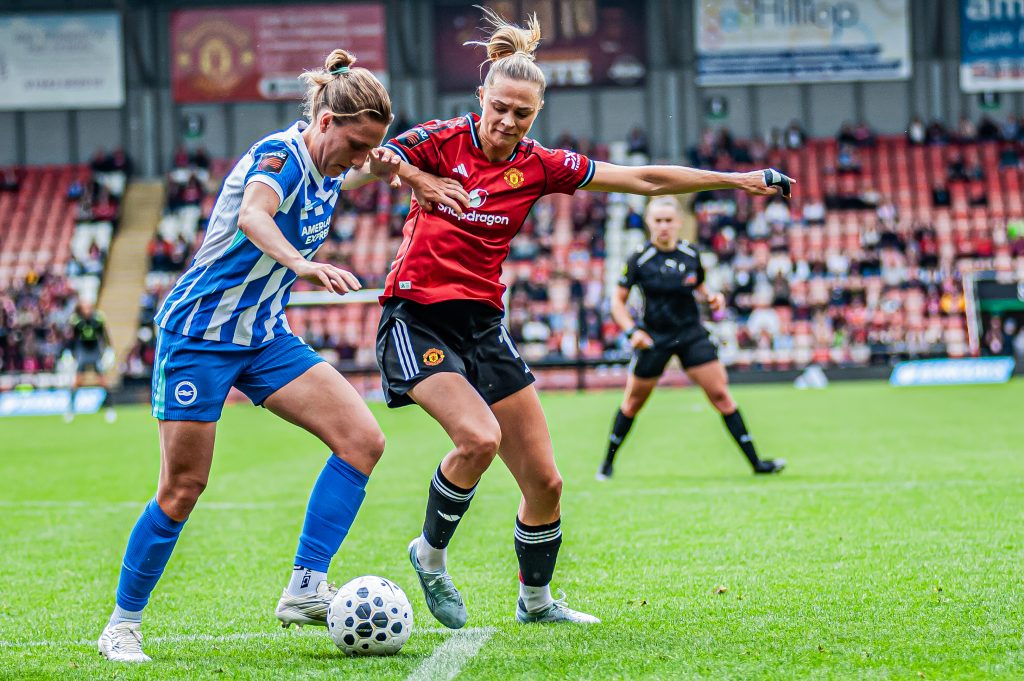
There was, however, a standout moment in cup competition, as Brighton reached the semi-finals of the FA Cup before being narrowly beaten 3–2 away to Manchester United — a result that represented a significant milestone for the club.
The end of the season also brought major squad turnover, with 11 first-team players departing, including both long-serving figures and short-term signings. This period effectively marked the beginning of a wider rebuild and the emergence of a new identity for the club.
In response, Brighton underwent a strong recruitment drive, bringing in 10 new signings, including high-profile additions such as Vicky Losada, Pauline Bremer, and Maria Thorisdottir. During the following season, there was another managerial change, with Melissa Phillips departing in February and Mikey Harris stepping in to see out the campaign.
On the pitch, Brighton showed signs of steady progress during the 2023/24 season, finishing ninth in the league — an improvement in context despite the same position numerically as the previous year.
Off the pitch, however, the most noticeable development came in support and attendance. Average home crowds rose to around 3,500, with a season-high attendance of 6,951 recorded at the American Express Community Stadium in a match against Tottenham Hotspur, despite a 3–1 defeat.
This represented a clear increase compared to earlier seasons, when average attendances were closer to 1,700, with some matches attracting as few as 600 spectators. The contrast highlighted the club’s growing profile and the rapid evolution of Brighton’s women’s team into a more established presence in the Women’s Super League.
The most significant shift for Brighton came after the 2023/24 season, when the club underwent a major squad overhaul with 16 departures. In response, they brought in over 14 new players ahead of the following campaign, 12 of whom would go on to play key roles in a historic season for the club.
Among the notable exits were leading scorer Elisabeth Terland, along with midfielders Tatiana Pinto, Veatriki Sarri, and Julia Zigiotti Olme. However, the rebuild also brought significant quality into the squad, including the arrivals of England international Fran Kirby and Japanese forward Kiko Seike, alongside key defensive additions such as Marisa Olislagers, Caitlin Hayes, and Rachel McLauchlan.
After several seasons of managerial turnover, Brighton finally found stability with the appointment of Australian coach Dario Vidosic, whose leadership helped bring cohesion to the squad and clarity to the club’s direction.
The impact of these changes was immediate. Brighton produced a record-breaking campaign, finishing fifth in the Women’s Super League and establishing themselves as one of the division’s most competitive sides.
Along the way, they recorded statement results, including a 4–2 victory over Arsenal, a thrilling 2–2 draw with Chelsea, and a hard-fought 1–1 draw against Manchester United. Increasingly, Brighton became one of the toughest teams to face at home, with Broadfield developing into a genuine fortress.
Their rise was also reflected in growing support, with a historic attendance of 8,369 at the American Express Community Stadium, alongside a strong 4,786 crowd at Broadfield Stadium. Despite their league success, cup competitions proved more challenging, as they exited the FA Cup in the fifth round and were knocked out of the League Cup at the quarter-final stage.
The 2024/25 season set a strong benchmark for Brighton, and they went on to build on it successfully in the following campaign. Manager Dario Vidosic strengthened the squad with several key additions, including centre-backs Moeka Minami, Manuela Vanegas, Maelys Mpome, and goalkeeper Chiamaka Nnadozie.
These signings added significant defensive stability, complementing existing players such as Caitlin Hayes, Charlie Rule, and Marisa Olislagers.
Brighton also added attacking depth with the loan signing of Rosa Kafaji from Arsenal, while Michelle Agyemang also joined on loan before being forced to return to Arsenal early in the season due to injury.
During the campaign, Brighton confirmed they would stage two fixtures at the American Express Community Stadium, reflecting the club’s continued growth in profile. Across the season, they averaged 5,697 spectators at the Amex and 3,184 overall for home matches, underlining their increasing support base.
On the pitch, Brighton continued to establish themselves as genuine top-four contenders capable of challenging for European qualification. The season began with a difficult run of fixtures, including defeats to Arsenal, Manchester United, Manchester City and Chelsea, which initially suggested the gap to the league’s elite still remained significant.
However, the team soon began to find consistency in the middle of the campaign, despite setbacks against West Ham, London City and Aston Villa. Encouragingly, they pushed Chelsea close in a narrow 2–1 defeat before producing one of their standout performances of the season: a dramatic home victory over Manchester City.
After falling behind inside five minutes, Brighton responded with three goals before City pulled one back, securing a landmark win and handing City only their third defeat of the season.
Momentum continued to build as Brighton earned a 1–1 draw away at Manchester United, a result that helped confirm Arsenal and Chelsea’s qualification for the UEFA Women’s Champions League.
They then followed this with another impressive display, holding Arsenal to a 1–1 draw in a rescheduled fixture at Broadfield. Together, these results reinforced Brighton’s growing reputation as a side capable of competing with and troubling the established top-four clubs.
Brighton’s history in the FA Cup has not always been straightforward, but this season marked a significant turning point for the club. Despite expectations that their run might end in the quarter-finals away at Arsenal, Brighton continued to defy the odds after earlier victories over Nottingham Forest (2–0) in the fourth round and West Ham (2–1) in the fifth round.
Against Arsenal, Brighton started strongly but were unable to find a breakthrough in the first half. The home side applied sustained pressure, forcing goalkeeper Chiamaka Nnadozie into a series of impressive saves to keep the Gunners at bay.
After the interval, however, Brighton returned with renewed intensity. Maddie Haley opened the scoring in the 48th minute, before Caitlin Hayes doubled the lead in the 63rd minute, securing a famous victory and sending Brighton into only the second FA Cup semi-final in their history.
Their next challenge came away to Liverpool. The hosts started brightly, taking the lead by the 11th minute and doubling it in the 22nd through Olsson. Brighton responded quickly, pulling a goal back before half-time to stay in the contest.
After the break, they continued to push forward and levelled the match at 2–2 in the 54th minute through Hayley, setting up a tense finish. With the game seemingly heading towards extra time and penalties, Noordam struck in the final moments to seal a dramatic victory, sending Brighton through to their first-ever FA Cup final and marking a historic achievement for the club.
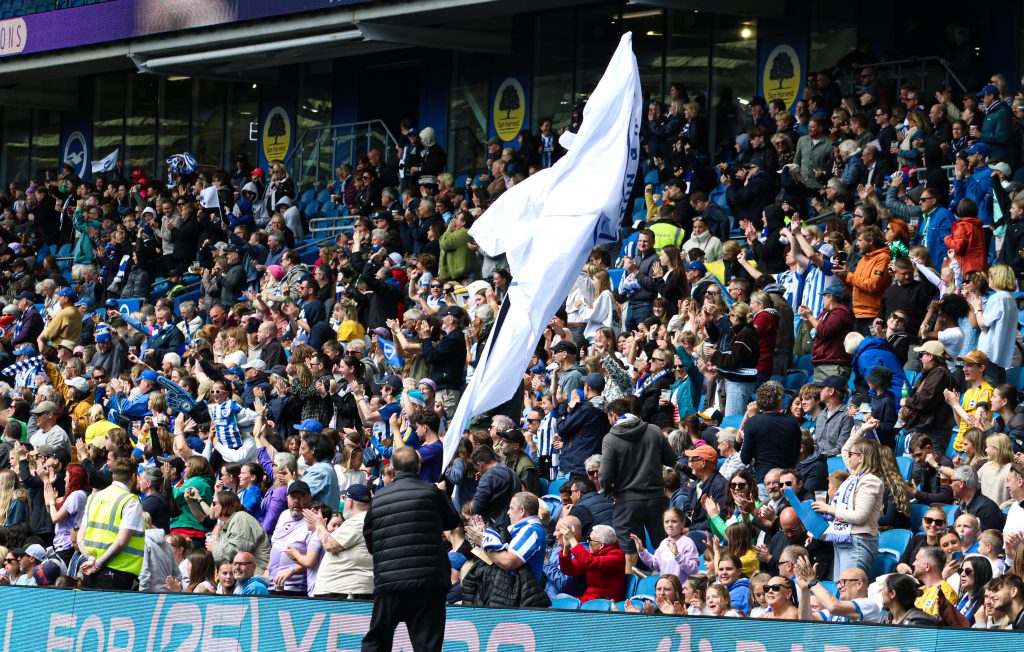
For the first time in their history, Brighton reached Wembley, with supporters travelling in huge numbers and filling multiple blocks of the East Stand across both tiers. On the pitch, they produced a brave and committed performance, but ultimately fell short in the final, suffering a 4–0 defeat to Manchester City.
Despite the result, manager Dario Vidosic reflected positively on the achievement, saying on the club’s website: “As much as we’ll be disappointed with today, I feel the result is a little bit unfair on the girls, in particular for the way they performed and their effort. But it wasn’t that long ago where we were probably fighting to get five minutes of dominance against a City team, and then to do what we did today, at Wembley, to be that brave, I’m really, really proud.”
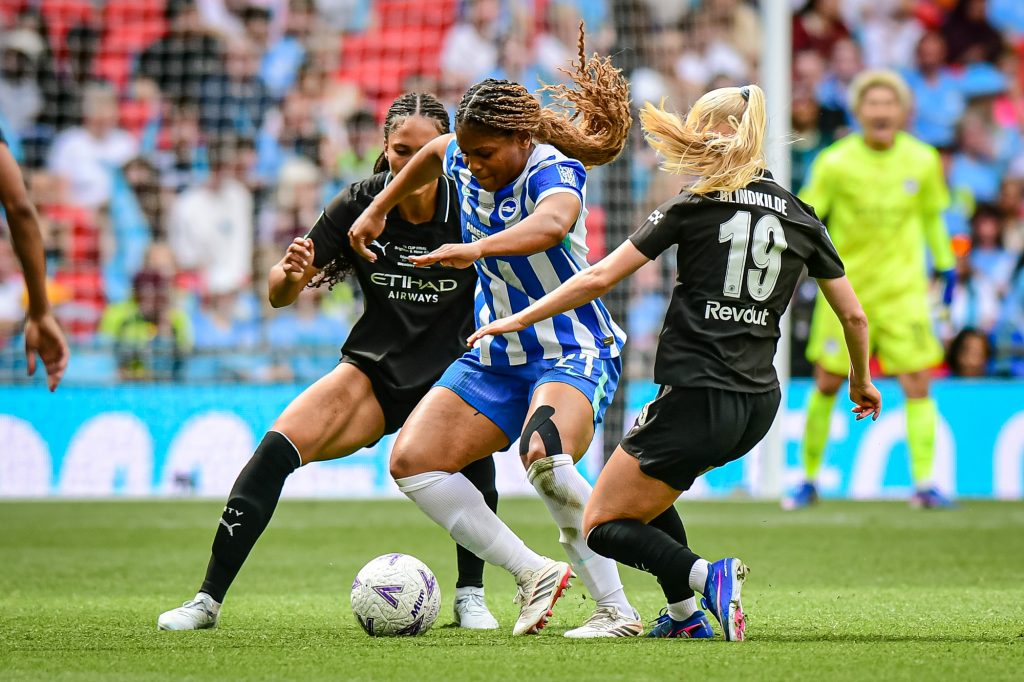
In the eight years Brighton have competed in the Women’s Super League and across 35 years as a club they have achieved significant milestones and now boast a history-making, record-breaking team.
Brighton & Hove Albion are far from finished, with continued ambitions to inspire the next generation of women and girls in the city, while honouring those who helped build the club’s foundations.
Looking ahead, the club aim to establish themselves as one of the most influential sides in Europe. Central to this vision is the proposed development of a dedicated women’s stadium, designed specifically for the women’s team.
The project, described as being “built for her,” is planned to sit alongside the current men’s stadium and would hold a capacity of around 10,000 spectators. If delivered, it would represent one of the first purpose-built women’s football stadiums of its kind in the UK and Europe.
This ambition reflects the direction Brighton want to move in, highlighting the club’s commitment to women’s football and the growing recognition of its importance within the wider game. It also signals a clear intent from the leadership to invest in the women’s side for the long term and continue supporting its rapid growth both on and off the pitch.