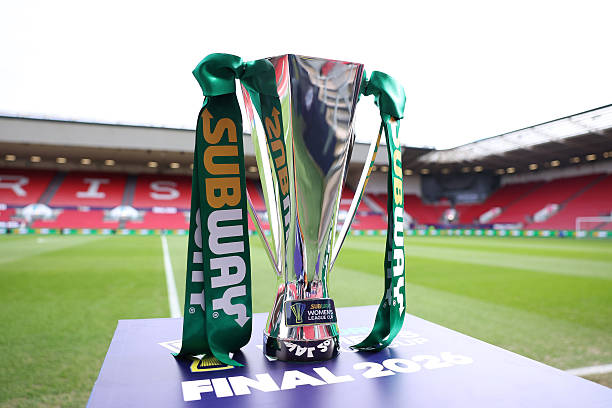
The secondary cup competition in English women’s football is getting a fresh identity from the 2026/27 season, with WSL Football announcing significant changes to both its name and format.
Previously known as the Subway Women’s League Cup, the competition will now be called the Subway Players Cup after they renewed their partnership with WSL Football on a multi-year deal.
But the name is only part of the change.
The revamped competition has been designed with player welfare at its core, with the new structure intended to give more players regular competitive football while easing some of the pressure created by an increasingly demanding calendar.
At the centre of the changes is the introduction of a Swiss-style league phase, replacing the group stage used previously.
Subway Continues Partnership
Subway’s new multi-year agreement follows two seasons as title partner of the League Cup and ensures the brand will remain closely linked with the competition as it enters its next phase.
The partnership has previously seen Subway work with The Well HQ on female-focused fuelling guidance, while also supporting initiatives designed to make sport and active lifestyles more accessible in communities across the UK.
The latest League Cup final demonstrated the growing appetite for women’s football.
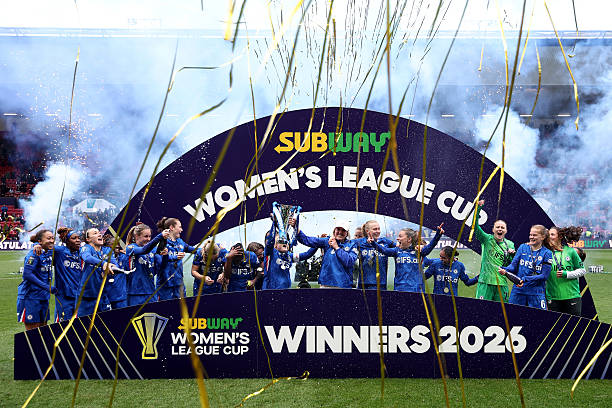
Chelsea’s 2-0 victory over Manchester United at Ashton Gate in March attracted more than 21,000 supporters, setting a new attendance record for a Women’s League Cup final.
Now, the competition is being asked to take another step forward.
WSL Football Chief Revenue Officer Zarah Al-Kudcy believes the new format can provide the meaningful minutes that young and fringe players need, while tackling the imbalance in playing opportunities across the women’s game.
That is the real purpose behind the Subway Players Cup.
It is not simply a new name for an existing competition. It is an attempt to make the secondary cup more relevant to the modern women’s football calendar, giving more players the chance to play, develop and compete for silverware.
And with the first League Phase fixtures set to be revealed in August, the first test of whether the new idea can deliver is now just around the corner.
More Than Just A Rebrand
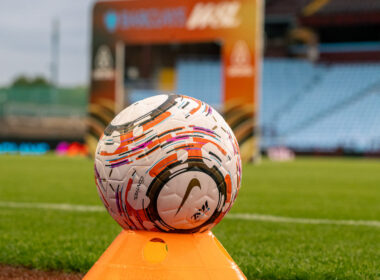
A new visual identity has been created around the idea of player movement, with the design drawing inspiration from the celebration of lifting a trophy.
The branding brings together colours associated with both the Barclays Women’s Super League and Barclays Women’s Super League 2, reflecting the clubs competing across the two divisions.
Players, clubs and supporters were involved in the consultation process as the identity was developed, ensuring the new look reflected the people at the centre of the competition.
That player-first approach is also reflected in the thinking behind the format itself.
Why Has The Competition Changed?
The changes follow a wider review of WSL Football’s secondary cup competition, with clubs, players and supporters consulted as part of the process.
One of the key issues identified was the difference in playing opportunities between players involved in European competition and those whose clubs are not competing on the continent.
While European football can create fixture congestion for some teams, players at clubs without those additional matches can find themselves with fewer competitive opportunities across the season.
The new Subway Players Cup is intended to help close that gap.
The three English clubs qualifying for the UEFA Women’s Champions League will not take part in the competition, allowing them to manage the additional demands of European football.
For everyone else, the cup will provide a guaranteed minimum of six matches.
That could mean more minutes for younger players, opportunities for those on the fringes of their squads and more chances for established players to rotate without sacrificing competitive football.
It could also make the competition more difficult to predict.
So, How Does The Swiss Format Work?
The traditional group stage has been scrapped in favour of one overall league table.
There will be 23 participating clubs, all competing within the same league structure.
However, that does not mean every team will play every other club.
Instead, each side will play six League Phase fixtures, three at home and three away against opponents selected within regionalised sections.
The regional element is designed to reduce the amount of travelling required by players and clubs, another consideration in a format built around welfare.
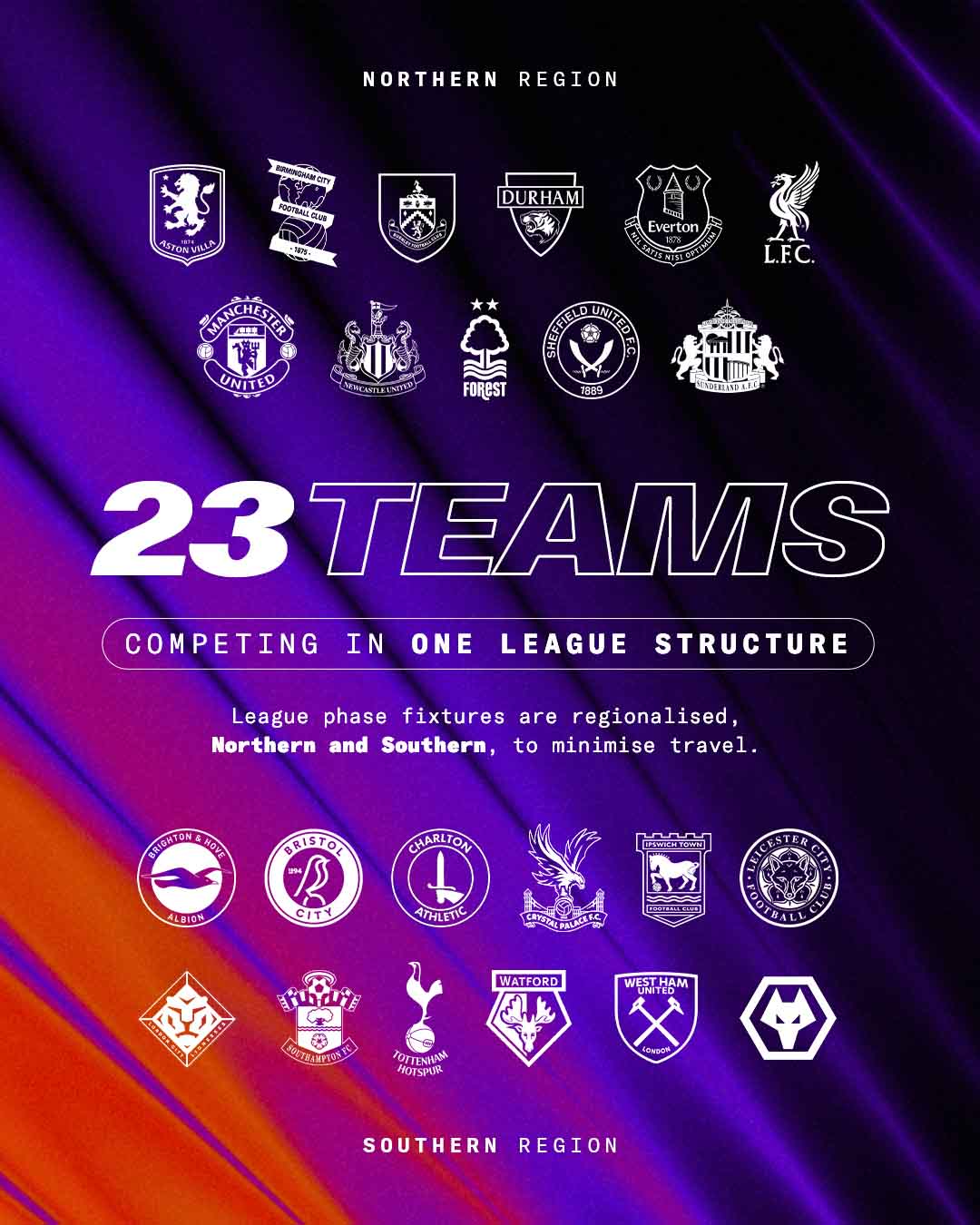
Northern Region
The northern region will contain 11 clubs, with Aston Villa, Birmingham City, Burnley, Durham, Everton, Liverpool, Manchester United, Newcastle United, Nottingham Forest, Sheffield United and Sunderland all competing in the section.
Southern Region
The southern region will feature 12 clubs, made up of Brighton & Hove Albion, Bristol City, Charlton Athletic, Crystal Palace, Ipswich Town, Leicester City, London City Lionesses, Southampton, Tottenham Hotspur, West Ham United, Watford and Wolves.
One League Table, Two Regions
While the 23 clubs are split into northern and southern sections for fixture purposes, they will not compete in separate competitions.
All teams will be placed into one unified league table, with results from matches across both regions contributing to the overall standings.
The League Phase will run between September and December, primarily during the rounds of UEFA Women’s Champions League fixtures.
There will be 69 matches in total, with three points awarded for a victory.
Should a game finish level after 90 minutes, there will be no replay or extra time. Instead, the tie will go straight to penalties.
The winning side will receive two points, while the losing team will still take one point.
It means there is something at stake right up until the final whistle, even when the two sides cannot be separated in normal time.
The fixtures for the League Phase will be revealed on Thursday, August 6 at 12pm.
A Clearer Path To The Trophy
Once the League Phase is complete, the competition will become much more familiar.
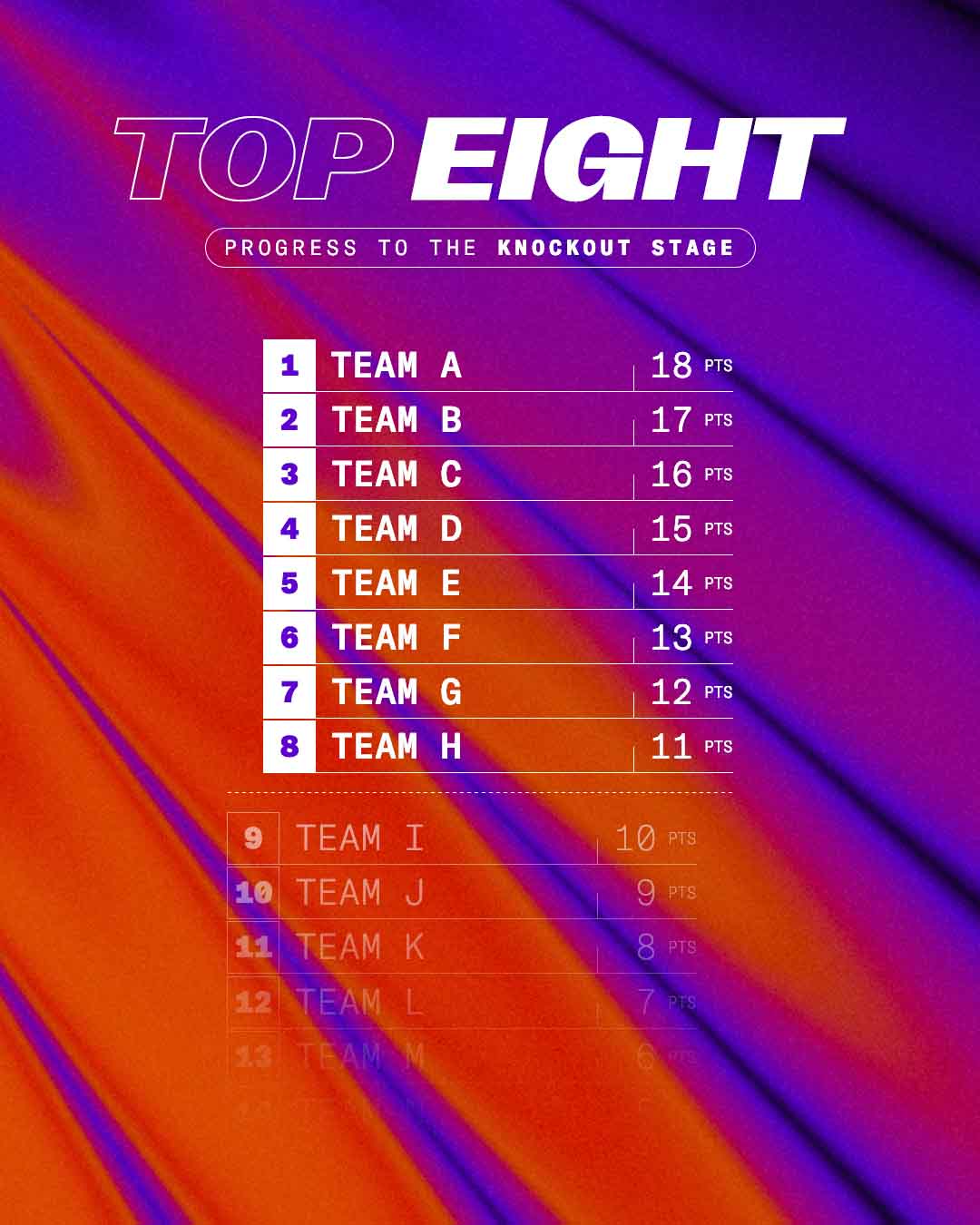
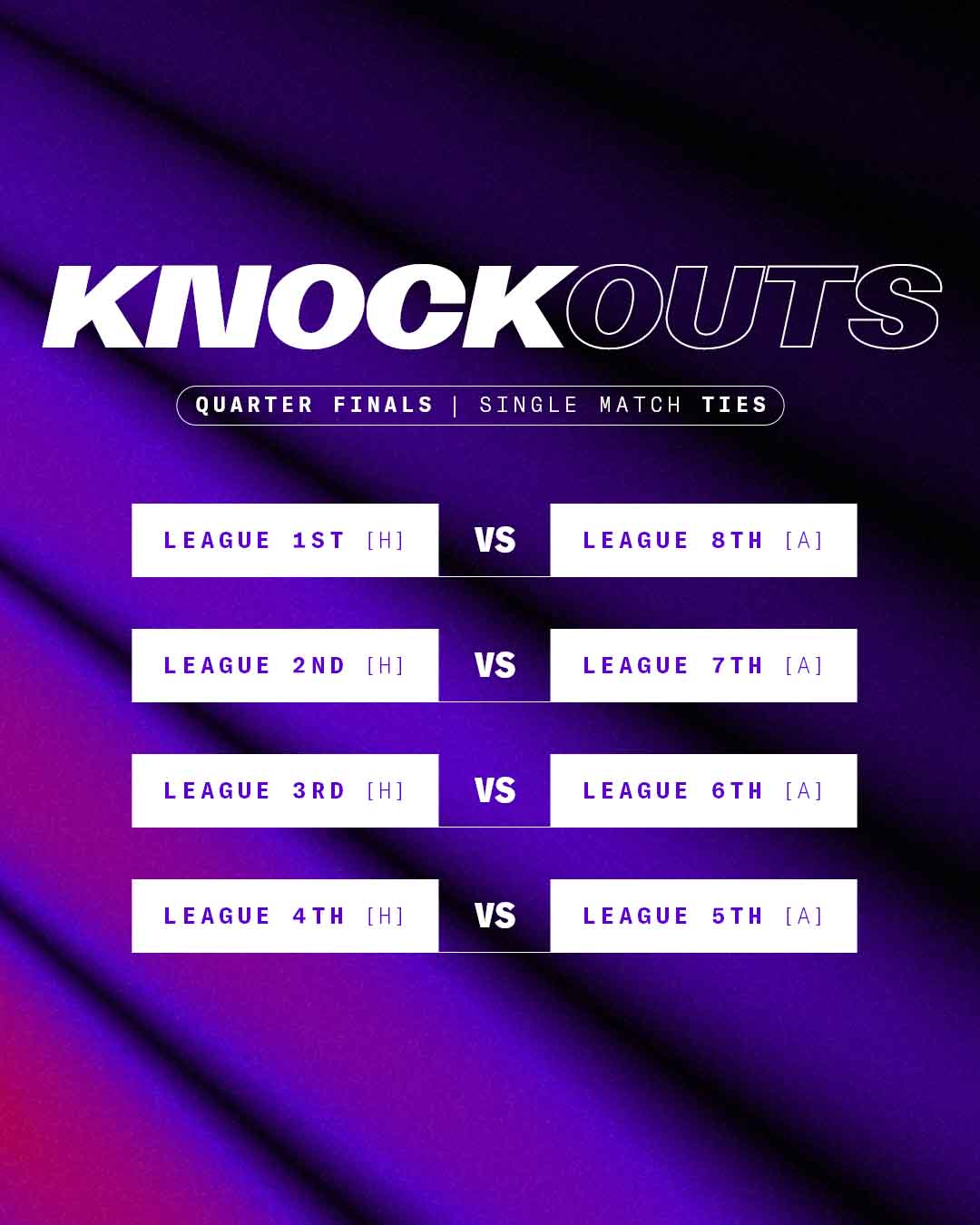
The top eight teams in the table will qualify for the knockout stages, with their finishing positions determining the quarter-final draw.
First will play eighth, second will face seventh, third will meet sixth and fourth will take on fifth.
The quarter-finals are scheduled for January 13 and 14, 2027.
From there, the competition moves into the semi-finals on February 10 and 11.
The winner of the first quarter-final will face the winner of the third, while the winner of the second will meet the winner of the fourth.
There is an added reward for those who perform well during the League Phase, too.
The higher-ranked team will have home advantage in the semi-final, giving clubs another reason to push for as high a position as possible.
The final will then be played at a neutral venue over the weekend of March 13 and 14, with the location yet to be announced.
Could We See A New Name On The Trophy?
Perhaps the most intriguing consequence of the new format is the opportunity it presents to clubs outside the usual group of domestic heavyweights.
The absence of the three Champions League sides means the competition will not feature every club from the Barclays Women’s Super League and Barclays Women’s Super League 2.
That is a significant change, but it could also give the Subway Players Cup a new identity of its own.
Without the teams balancing domestic football with European commitments, the gap between clubs could narrow and provide more sides with a genuine opportunity to go all the way.
For younger players and those fighting for regular first-team football, the competition could become particularly important.
It offers six guaranteed matches in which players can earn minutes, gain experience and potentially force their way into their manager’s plans.
That is ultimately what the new competition is designed to achieve: not simply adding fixtures to the calendar, but making those fixtures count.