

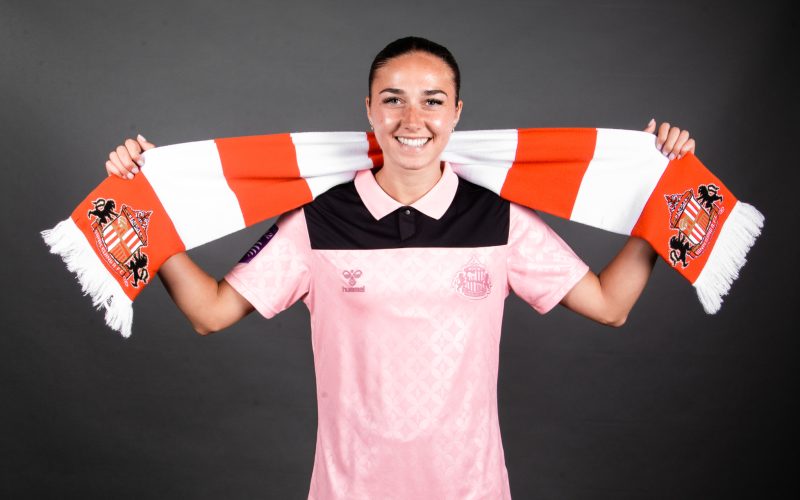
Tara Bourne believes Sunderland’s new era is being driven by ambition, professionalism and the hard-working identity that has long been associated with the North East.
The Sunderland defender says investment from Bay Collective, the appointment of Rhianne Skinner and an increased focus on professionalism have combined to create an “exciting project” as the club prepares for a new WSL 2 season.
Having experienced high-performance environments with England, Manchester United, Manchester City and Liverpool, Bourne believes Sunderland are beginning to replicate the standards she has seen at the highest level.
“Inside it’s such an exciting project that we’re gathering together,” Bourne said. “Hearing from Bay Collective and what they have to say and their plans for the club and obviously the appointment of Rhianne Skinner has been massive as well.”
For Bourne, the changes extend well beyond investment. She believes Sunderland are creating an environment where players are supported as people, with the facilities and staff enabling them to focus on their football and perform at their best.
At the same time, she feels the club has retained the identity that makes Sunderland and the wider North East unique.
“I feel like I’ve kind of clicked back into that mindset of like, this is the North, this is that working class, the drive, like you work for everything,” she said.
One Game At A Time
While promotion is an obvious ambition for clubs competing in WSL 2, Bourne is deliberately avoiding putting a specific target on Sunderland’s season.
Instead, the squad’s philosophy is simple: focus on the next game and try to win it.
“We go every game to win,” she said.
“We’re not going to look too ahead of ourselves; we’re not going to look at other teams, what they’re doing. We focus inside.”
That approach is built around controlling what the team can control. Refereeing decisions, injuries, weather and other external factors cannot be influenced, so Bourne insists Sunderland must avoid excuses and concentrate on their own preparation and performance.
“We never want to have excuses of the external,” she said. “We just focus on what we can do.”
It is a mentality that allows Sunderland to remain focused on their own progress rather than becoming distracted by the wider promotion race.
WSL 2 Continues To Raise Its Standards
Having spent around five or six seasons competing at this level, Bourne has seen first-hand how much WSL 2 has developed.
The standard is becoming increasingly competitive, with players boasting WSL experience now featuring throughout the division and clubs continuing to raise their ambitions.
For Bourne, that progress makes promotion more difficult but also more rewarding.
“You see so many WSL players dropping back to play,” she said.
“The top leagues are getting better, we’re getting better, and it’s just so exciting. I think it’s harder to get there, but it makes it sweeter when you do get there.”
She also welcomed the current promotion structure, which includes one automatic promotion place and a play-off opportunity for the remaining spot.
“I think having those two spots fights at the end,” she said.
The competitiveness of the division was illustrated by the end-of-season relegation clash between Leicester and Charlton, which Bourne described as another example of the drama now surrounding WSL 2.
With so much at stake throughout the table, every fixture can carry significance, reinforcing Bourne’s desire to keep Sunderland’s attention on the game immediately in front of them.
‘Only Testing Yourself Against The Best Will Make You Better’
The Subway League Cup also provides WSL 2 clubs with opportunities to face teams from the division above.
For Bourne, those fixtures are more than just competitive matches. They provide a valuable opportunity to measure progress against some of the strongest opposition in the women’s game.
“Only testing yourself against the best is going to make you better,” she said.
The defender, who has previously played for Manchester United, admitted that returning to the WSL is one of her own ambitions, making the opportunity to test herself against top-flight opposition particularly valuable.
She believes the gap between the two divisions may be narrowing, although the leading WSL sides remain a significant challenge.
“I’d like to think the gap is narrowing,” Bourne said, “but it’s going to be tough to chase them top teams.”
For Sunderland, those opportunities could therefore serve both an immediate competitive purpose and a longer-term developmental one as the club looks to establish itself among the leading sides outside the WSL.
A Bigger Platform For WSL 2 Players
Bourne also believes increased media coverage of WSL 2 is vital for the development of players and the league itself.
She welcomes the growing attention being given to clubs outside the WSL, arguing that greater visibility can create opportunities for players waiting for their chance to progress.
“The fact that they’re reaching out now to WSL 2 teams, and we kind of get the benefits that WSL teams get, I think it’s massive,” she said.
Bourne pointed to initiatives such as Nike’s boot programme as examples of the opportunities increased exposure can provide.
For younger players in particular, she believes visibility can help them attract opportunities and potentially make the step into the WSL.
“Media is such a powerful thing these days when it’s used in the right way,” she said.
The growth of the league’s profile therefore has implications beyond individual clubs, potentially giving players across WSL 2 a greater platform on which to showcase their ability.
Consistency Is Key
On a personal level, Bourne’s main objective is consistency.
She wants to continue allowing her technical strengths to shine while adding the leadership and experience she has gained from years of playing in WSL 2 and at elite clubs.
“For me, it’s keeping that consistency,” she said. “Honing in on my super strengths, and then bringing that leadership, that experience in the league.”
Bourne also wants to contribute to Sunderland’s possession-based style, with the club aiming to play out from the back and produce exciting football.
Her experience could be particularly important when the team faces difficult periods. Across a long season, setbacks are inevitable; responding to them quickly can be just as important as the results themselves.
“You’re going to lose games,” she said. “How do you get out that dip as quick as you can?”
Her role will be to help teammates recover from setbacks, maintain belief and keep the group moving forward.
The Centre-Back With An Attacking Edge
Bourne enjoyed an impressive individual campaign last season, finishing as Sunderland’s leading assister despite playing at centre-back.
She took responsibility for many of the team’s set pieces and hopes to build on that contribution this season.
“I was the top assister being a centre-back,” she said.
Whether she continues taking the set pieces remains to be seen, with Bourne joking that Skinner may prefer to have her inside the box.
If she does lose that responsibility, however, she has another target.
“If I’m not taking the set plays, I’d like to score more,” she said.
There is also a competitive side to Bourne’s game that she believes supporters may not always see. Behind her technical ability and composure in possession is a willingness to battle with opposing forwards.
“I like to do the dirty stuff as well,” she said.
It is an aspect of her game that complements her ability on the ball and highlights the balance she brings to the centre-back position.
Learning From The Best
Bourne credits several influential coaches with helping shape her career.
Casey Stoney played an important role during her time at Manchester United, while Martin, Charlotte Healy and coaches from her Liverpool youth career also contributed to her development.
“I’ve took a little bit from everyone,” Bourne said.
Her experiences across different clubs and environments have helped shape her approach, but her motivation remains firmly centred on personal improvement.
Bourne wants to fulfil her potential, represent her country and reach the highest level possible.
“My motivation is just being the best player and person I can be,” she said.
Sunderland’s Next Generation
Perhaps most importantly, Bourne believes the club’s current ambitions can have a significant impact on the next generation of North East footballers.
Sunderland’s emphasis on hard work, family and resilience is something she feels can provide young players with the environment they need to develop.
She highlighted academy graduate Chloe Paxson as an example of the toughness and determination being produced within the club.
For Bourne, the pathway is not simply about footballing ability, but about creating a supportive environment around young players and giving them the platform to grow.
“You get an arm around you, and you go out on the pitch, and you work hard, and then you come back, and you get an arm around you,” Bourne said.
That combination of ambition, professionalism and North East identity could prove crucial as Sunderland enter a new era.
Yet while the club has clear long-term ambitions, Bourne insists the focus must remain firmly on the present.
“One game. One opportunity to win. And one step at a time.”