

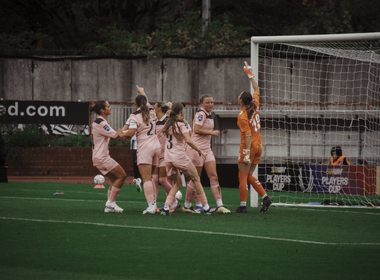


‘Women’s football reminds me of “Kids for a Quid”,’ my mother told me during the Euros.
‘They were the worst to steward.’ Well, her apathy towards the sport suddenly made a lot more sense. Then again, apathy probably isn’t the right word. Mum has sat through West Ham getting battered more times than either of us care to remember and even travelled a nine-hour round trip to watch them in an FA Cup final. She cares about football, but she has always had a sticking point when it comes to the women’s game.
Watching the Euros, rolling her eyes at another Mexican wave, she finally had her own epiphany as to why she struggled to get as excited as everyone else. It wasn’t the football itself that put her off. It was everything that seemed to come wrapped around it.
On one level, I actually agree with her. Women’s football is my life. I live it, breathe it and, quite frankly, consume far too much of it, but I’m increasingly tired of the expectation that the sport has to revolve around entertaining children.
I grew up as a West Ham fan. No surprises there; nobody willingly chooses that life. But I also spent plenty of weekends watching Dagenham & Redbridge because it was the more affordable way to see live football. From the age of seven until I was about ten, my parents took me home and away with the Daggers. I got soaked by the rain, sunburnt in the summer and very nearly met my end after drinking slightly out-of-date Pepsi at Purfleet. At least, that’s how my dramatic childhood self remembers it.
I also fell hopelessly in love with Paul Cobb, the blonde-haired, blue-eyed number eight. Anyone who has listened to me wax lyrical about Ellen White for more than five minutes will know that my taste hasn’t really changed all that much.
I remember those years as a Daggers fan incredibly fondly. I was mascot twice and was given the pound coin from the coin toss by the referee, which is still sitting somewhere in a money box. I remember long road trips with my parents, accompanied by carefully curated mixtapes. Those journeys remain some of my happiest childhood memories.
The matches themselves blur into one. It felt as though we played Rushden & Diamonds or St Albans every other week, but the routine never changed. We’d arrive at the ground, buy a programme, watch the football, and head home. That was enough.
Not once did I look back and wish there had been a face painter, a magician or a mascot meet-and-greet. The entertainment was the football. If I wanted something to do during the match, I either ran around the terraces or was sent to the burger van to collect half-time refreshments.

Women’s football is still playing catch-up with the men’s game, despite its remarkable growth. Many clubs simply cannot keep pace, whether through financial constraints, competition from nearby teams or the lingering indifference of supporters who still dismiss it as the “ladies”.
It’s understandable then that clubs have looked towards families as their target audience. Attract the attention of the younger generation, and perhaps you’ve secured lifelong supporters.
Football itself no longer seemed to be considered sufficient entertainment. Somewhere along the way, a bacon roll and a hot chocolate stopped being enough.
In theory, there is nothing wrong with clubs trying to attract families. Most women’s teams operate at a loss, so filling seats by whatever means possible makes financial sense. The problem comes when the match itself becomes secondary to everything happening around it. At that point, you risk turning football into the sideshow.
Even worse, you reinforce the criticisms of those who already question the legitimacy of the women’s game. Instead of proving them wrong, you unintentionally hand them ammunition.
There remains a sizeable gulf between the WSL’s biggest clubs and everyone else.
During the 2025-26 season, all but two clubs saw their attendances fall. Arsenal remain the only side consistently attracting crowds above 10,000. That isn’t simply because they’ve invested brilliantly in growing the women’s game, although they absolutely have. It also helps when your squad is packed with recognisable Lionesses and international stars, making you the obvious choice for newcomers with no existing club allegiance.
Following England’s two European Championship triumphs, the conversation centred almost entirely on creating a legacy for young girls. That’s a wonderful ambition. Every young player deserves the same opportunities to dream as their male counterparts.
However, that relentless focus has also left many older supporters feeling overlooked.
In some cases, it has even cheapened the product, creating an environment where too many fans are more interested in what they can collect after the final whistle than what happens during the 90 minutes.
Perhaps clubs and governing bodies underestimated where all that marketing would lead. If every campaign focuses on 23 Lionesses, those players naturally become the attraction. Fans gather wherever they can get closest to their heroes, creating the atmosphere we now see at only a handful of clubs.
Women’s football supporters don’t always follow the same tribal loyalties as those in the men’s game. Many choose clubs based on their favourite player, support multiple teams or follow a different women’s side from their men’s club. There is nothing inherently wrong with that. Until, eventually, there is.
I’ll happily admit I did exactly that. When I first started following women’s football seriously, Manchester City became my team. I lived close enough to attend regularly.
West Ham were buried in a southern division I couldn’t realistically travel to as a non-driver, and City had the biggest collection of international stars.
The moment West Ham reached the WSL, though, that all changed. I swapped the Joie Stadium for endless journeys along the M6 and M1 without a second thought.
Most supporters don’t move in that direction. Few leave trophy-winning teams to support a club that regularly proves it still can’t do it on a cold night in Leigh. That, in many ways, is part of why the post-Euros boom already feels as though it’s beginning to fade.
Having followed the women’s game since 2015, I can clearly see the difference between life before and after England’s first Euros victory. If I’m honest, I preferred it before.
Back then, supporters met in the pub before kick-off, watched the game, chatted afterwards, and headed home. Occasionally, players would stop for a few photos or signatures, and that interaction felt genuinely special. Now you’re fortunate if you can even watch the final 15 minutes uninterrupted before children rush to the barriers waving homemade signs in search of shirts, boots, or selfies.
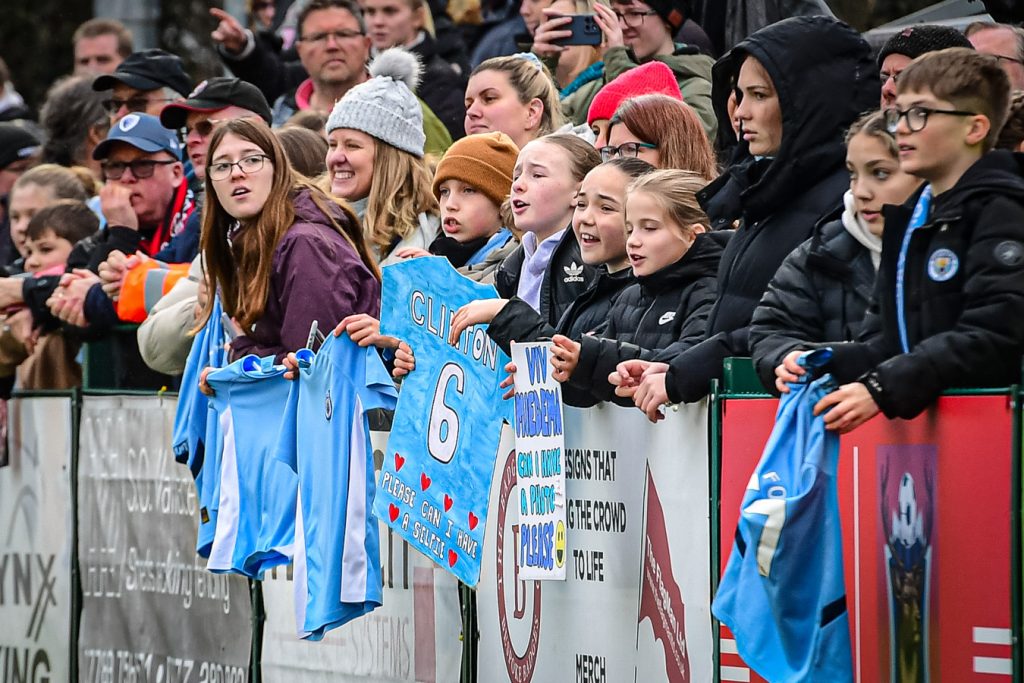
That unlimited access has inevitably backfired. Clubs have responded with appreciation laps, organised lotteries, scheduled meet-and-greets or, in some cases, simply asking supporters to leave after the game. The backlash has been fierce, with some fans openly saying they won’t attend unless they’re guaranteed access to the players.
As a result, clubs continue searching for new ways to provide instant gratification in the hope of boosting attendances. Ironically, it’s pushing many traditional supporters away.
The message after the Euros was simple: if you can see it, you can be it, but what happens if you’re not an eight-to fourteen-year-old girl? Scroll through many clubs’ websites and social media channels, and it’s difficult not to notice who almost every image is aimed at. Half-time entertainment is for children. Matchday activities are for children. The entire experience increasingly feels designed for children.
Most supporters simply want to arrive, grab a drink, find their seat, and watch the football. They don’t want to weave past face painters and oversized mascots just to reach the turnstiles.
If the sideshow isn’t working and the marketing strategy isn’t delivering sustainable growth, perhaps the answer is remarkably simple.
Go back to the football. Invest in players, coaches, and facilities. Improve the product on the pitch and allow that to become the attraction once again.
Growth is a marathon, not a sprint.
To the parents who worry their children won’t be entertained enough, I’d offer one small piece of advice. Teach them to appreciate chips that are just a little too cold, tea that’s just a little too hot and a game that’s always just a little bit beautiful.
Oh, and maybe check the expiry date on the soft drinks first.