


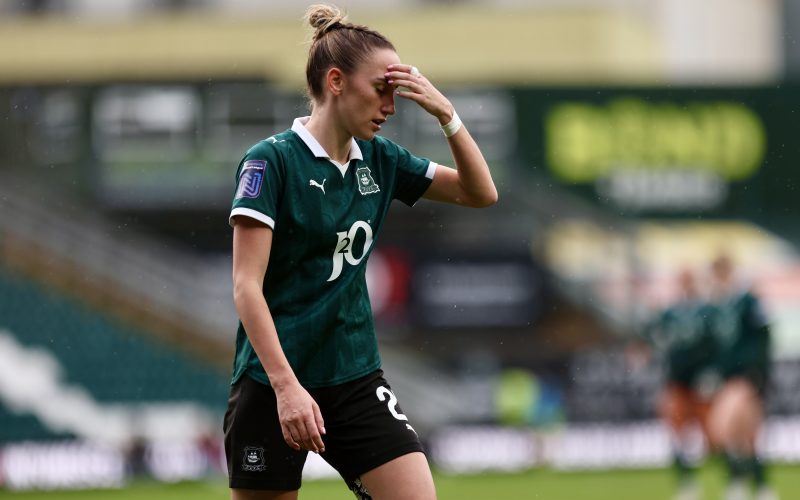
The players of Plymouth Argyle have issued a strongly-worded statement following the club’s decision to significantly reduce the team’s budget and release the majority of the squad at the conclusion of their contracts next month.
The news comes just weeks after the most successful season in the club’s history, leaving many across the women’s football community questioning the direction of travel at Home Park leaving many across the women’s football community casting doubt over the future ambitions of Argyle Women.
In their statement, the players reflected on a campaign that saw them achieve a second-place finish, reach both the FA Women’s National League (FA WNL) Cup Final and WSL2 Play-Off Final, lift the County Cup and record their highest attendances to date.
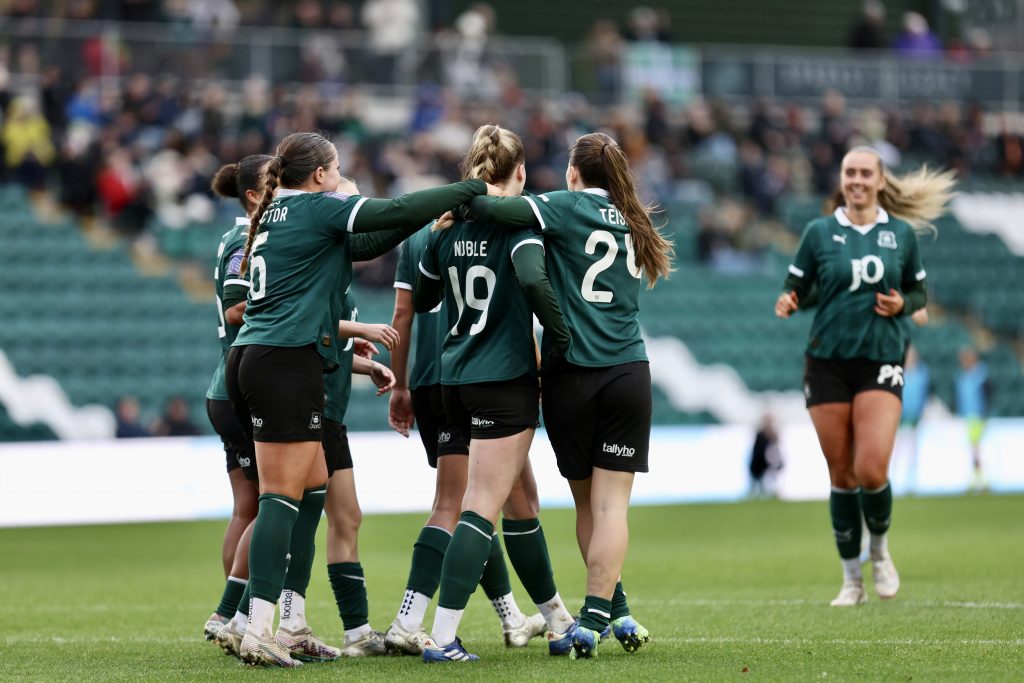
“This season was the most successful in the history of Plymouth Argyle Women,” the statement begins.
The players went on to highlight the contrast between the club’s previously stated ambitions and the decisions made in recent weeks.
“Throughout the season, we were told that the club had ambition, that it was building towards becoming a full-time professional outfit, and that women’s football was important to the football club. That is why the events of recent weeks have been so difficult to understand.”
“Following a decision from the board to significantly reduce the team’s budget, and the understandable resignation of our manager, nearly all players have been informed via an email from the club that they will be released at the end of our contracts next month.”
“This decision was communicated through a cold, impersonal email, providing us with no opportunity for open, honest, or meaningful dialogue and preventing us from gaining clarity on the situation.”
The players acknowledge that football clubs are often faced with difficult financial decisions but expressed their disappointment at the way the situation has unfolded.
“To be publicly recognised by the FAWNL for helping grow the women’s game, while privately seeing the squad dismantled and our support cut, feels contradictory and deeply frustrating. We feel that the staff and players who have given everything for the badge this season should have been treated with greater care, respect and empathy.”
Perhaps the most powerful section of the statement focuses on the wider implications for women’s football in the South West.
“While we are hurt, this is about more than just our squad. It is about the negative message being sent to women and girls across Plymouth, our wider fanbase, the South West and the broader football community, who have looked up to this team as proof that the women’s game is valued, supported, and growing.”
The statement concludes with a heartfelt message to supporters, thanking those who backed the team throughout the season and expressing sadness at the manner in which the campaign has ended.
A Familiar Warning Sign
From the perspective of this website, the developments at Argyle are deeply disappointing and should serve as a warning to clubs across the women’s football pyramid.
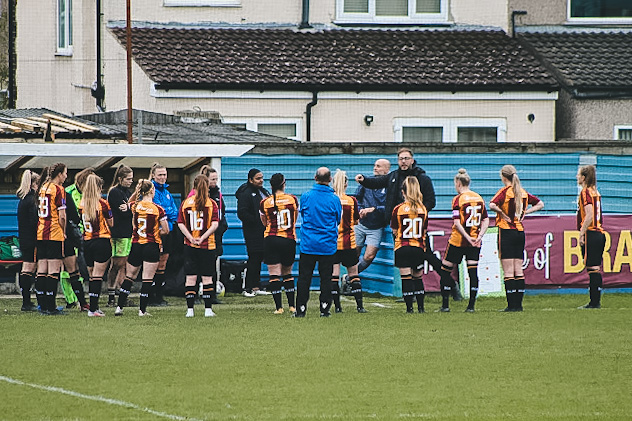
The situation bears striking similarities to what unfolded at Blackburn Rovers just last summer.
The substantial cuts to investment and support ultimately led to the departure of players and staff, a significant weakening of the squad and a rapid decline in on-field competitiveness.
The consequences were severe. A club that had previously competed at a higher level found itself relegated, eventually dropping into the fifth tier of the women’s football pyramid.
Argyle have just enjoyed a landmark season, inspiring supporters across the region and providing a pathway for aspiring young players. To see that progress placed in jeopardy is not just frustrating but it is infuriating that we back here again. Who is it going to be this time next summer?
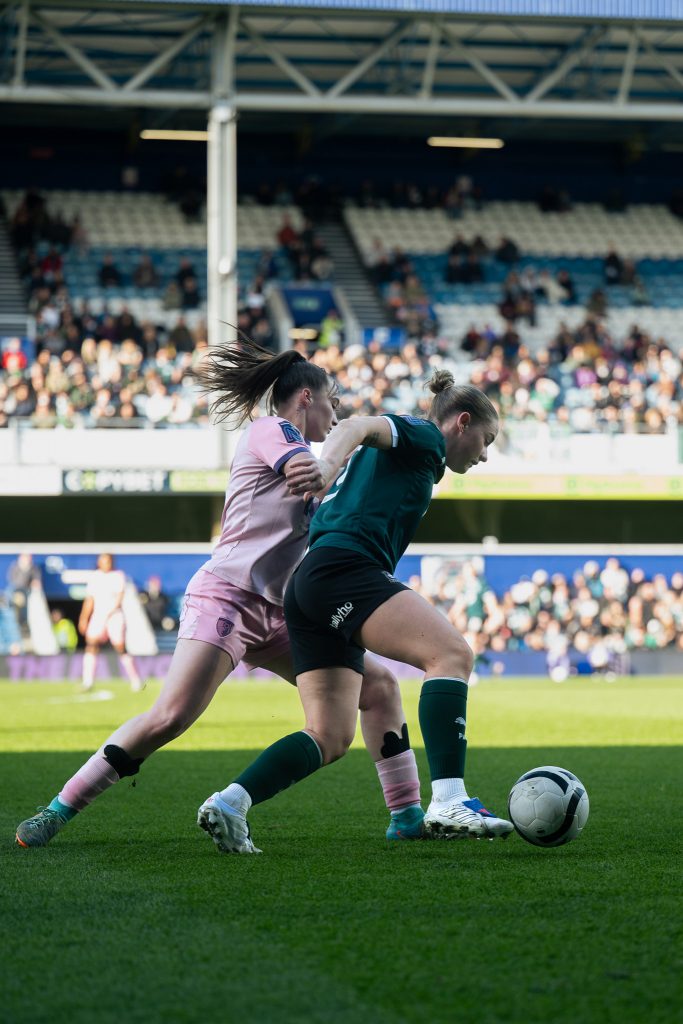
Women’s football has spent years building momentum through increased visibility, investment and opportunity. Decisions such as these risk undermining that progress and sending the wrong message to players, coaches, volunteers and supporters who have worked tirelessly to grow the game.
The hope now will be that solutions can be found, dialogue can be reopened and that Plymouth Argyle can once again become a club that, in the words of its players, “advocates for the women’s game, drives progress and creates a clear pathway for football to grow in our region.”
Fans Voice Anger and Concern
The developments have also sparked a strong reaction among supporters.
One lifelong Argyle fan, who asked to remain anonymous, described feelings of shock, disappointment and anger at the club’s decision:
“One Argyle, men and women under one club. Yeah, right?” they said.
“The women’s team relies on the men’s team financially, and we see that across football, but for them to be treated this way is utterly poor.”
The supporter was particularly critical of the manner in which the players were informed.
“Players found out via email. Not even face-to-face. We’ve had one of the best seasons in the team’s history, and only a month ago, Paul Berne confirmed at the Fans’ Forum that the club would back the women’s team. Yet this feels like the complete opposite.”
The fan added that many supporters are currently more concerned about the welfare of the players than the uncertainty surrounding the wider football club.

“As fans, we are shocked, disappointed and angry. It’s completely wrong on so many levels.
“This isn’t what we wanted. We don’t know what’s going to happen to us as a club yet. But our biggest concern right now is the players. We want to make sure their voices and feelings are heard. We cannot believe the way that the club have treated them.
“The players have had barely any notice, and they felt they had to speak out in order to expose those high up in the club who have made this appalling mistake.
“We stand with Argyle Women. We back them all the way.”
The developments at Argyle Women are likely to reignite concerns about the fragility of progress within the women’s game.
The situation bears similarities to events seen elsewhere in the women’s football pyramid, where reductions in investment have led to player departures, weakened squads and declining competitiveness on the pitch.
For Argyle, the timing is particularly difficult. The club has just enjoyed a landmark campaign, inspiring supporters across the region and providing a pathway for aspiring young footballers in the South West.
Many will now fear that the momentum built over recent years could be lost. Women’s football has spent years growing through increased visibility, investment and opportunity.
Decisions such as these risk undermining that progress and sending a discouraging message to players, coaches, volunteers and supporters who have worked tirelessly to help the game develop.
The hope among many connected to the club will be that meaningful dialogue can be reopened and that Plymouth Argyle can once again become, in the words of its players, a club that “advocates for the women’s game, drives progress and creates a clear pathway for football to grow in our region.”
For now, however, what should have been a summer of celebration has instead become one of uncertainty.