



One of women’s football’s biggest selling points during its rapid rise in attention and investment, particularly in England, was that it wasn’t the men’s game.
Over and over again, we were told women’s football would be different.
In the men’s game, much has been written about the widening gulf between the haves and the have-nots – a divide many believe has become almost impossible to bridge. Title races are increasingly confined to a select group of wealthy clubs, while the world’s best players gravitate towards whoever can offer the biggest financial package.
Too often, transfer decisions are driven by money rather than ambition or sporting opportunity. Success feels bought rather than earned, and competition increasingly resembles an arms race instead of a contest.
As audiences grew, the billionaires began to circle. While the Lionesses inspired a generation and families bought into the idea of a more egalitarian footballing landscape, women’s football insisted it would not repeat those mistakes.
The promise was repeated often enough that many believed it. No reckless spending. No power-hoarding superclubs. No slow surrender to the idea that money should dictate everything.
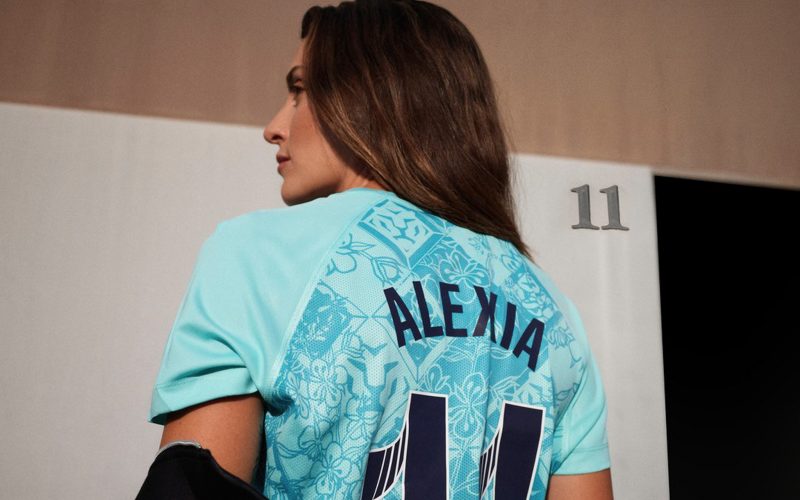
That narrative took another turn this week when Alexia Putellas became the latest superstar to join London City Lionesses.
This is more than another marquee signing. It feels like the moment the illusion finally gives way to reality.
For years, the women’s game has been celebrated as football’s moral counterweight. Growth could be organic. Success could be shared beyond the traditional elite. Competitive balance could survive where the men’s game had allowed it to disappear.
That identity now feels under real strain.
This is how a dream begins to die. Not in one dramatic moment, but through a transfer backed by the financial muscle of an owner already accused by many of stripping away the identity of one of women’s football’s most historic clubs.
Michele Kang wants supporters to see this as ambition. That the world’s best player leaving one of football’s biggest institutions for a seven-year-old club based in a Kent commuter town represents bold disruption rather than financial power reshaping the landscape.
This is a club that has already played at multiple home grounds while still trying to establish an identity of its own. It is difficult to argue that history, culture or tradition were the decisive factors here.
Putellas will inevitably speak about “the project”, about “building something special”, and about avoiding a direct Women’s Champions League rival to Barcelona.
That explanation feels convenient.
Kang’s entire ambition is to build a club capable of dethroning Barcelona. Joining London City Lionesses is hardly stepping away from that objective.
Equally telling is the opportunity Putellas has turned down.
Mexico’s Liga MX Femenil, where her own football academy is based, could have benefited enormously from a player of her stature. We saw the impact Jenni Hermoso had on the league. Putellas could have transformed it entirely.
A Spanish-speaking global icon moving to Mexico would arguably have done more for the worldwide growth of the women’s game than moving to suburban London.
Instead, she chose the WSL.
Few really want to acknowledge the obvious reason why. A move to Tigres or Monterrey may have left a greater legacy for the sport, but it would almost certainly not have matched London’s financial rewards.
From London City Lionesses’ perspective, the logic is impeccable.
Signing arguably the greatest player women’s football has produced is a statement that they intend to become one of the sport’s defining clubs.
And it will work.
Attendances will grow. Social media numbers will explode. Interest in the club will reach levels that would previously have been unimaginable.
Putellas is the centrepiece of a remarkable recruitment drive that has also brought in Mary Earps, Nicole Anyomi and Janni Thomsen. Whether supporters believe those players were drawn primarily by sporting ambition or something considerably more lucrative is another debate entirely.
In an era where many supporters follow players as much as clubs, signing Putellas and Earps is a calculated attempt to attract attention to everything else London City Lionesses are building.
The press box will stay full. Hayes Lane will attract bigger crowds. Sponsors will notice.
The investment was always going to change women’s football. The question was only how far.
Right now, this transfer suggests the answer is further than many hoped.
This is not simply a statement signing.
It is evidence of how quickly influence shifts once one club gains financial resources others cannot hope to match.
It may also force the rest of the Women’s Super League into difficult decisions.
London City Lionesses have effectively thrown down the gauntlet to established names such as Manchester United, Liverpool and Aston Villa.
If those clubs continue to invest cautiously while independent billionaire-backed projects accelerate, they risk being overtaken.
How they respond matters.
Either the traditional giants effectively admit that their women’s teams will never receive the same commitment as their men’s sides, or they begin matching this level of spending.
Neither outcome feels particularly healthy.
Men’s football has already travelled this road. Around the turn of the millennium, transfer fees and player valuations accelerated beyond recognition. Women’s football has far more clubs that would struggle to survive that kind of financial escalation.
There is, of course, another interpretation.
Investment raises standards. Elite players attract new audiences. Ambition drives growth.
But there is also a pattern that feels uncomfortably familiar.
This is how imbalance begins. Not overnight, but through moments like this, where one transfer quietly redraws the boundaries of what some clubs can achieve and what others can realistically compete with.
Women’s football has not reached that point yet.
But this feels like the moment it started moving towards it.
And that is not something I feel comfortable celebrating.