

I want to write this now. Not in November, when we have enough evidence to decide whether Eva Olid is actually doing a good job. Not after Christmas, when Manchester United’s season has taken some recognisable shape. Now.
We are only two games into her United career, but I already want to put a marker down about the way parts of WSL media are talking about her.
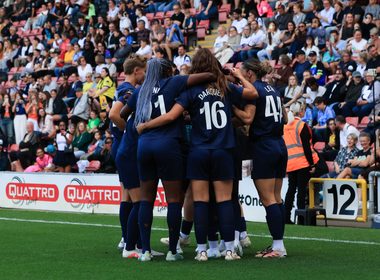
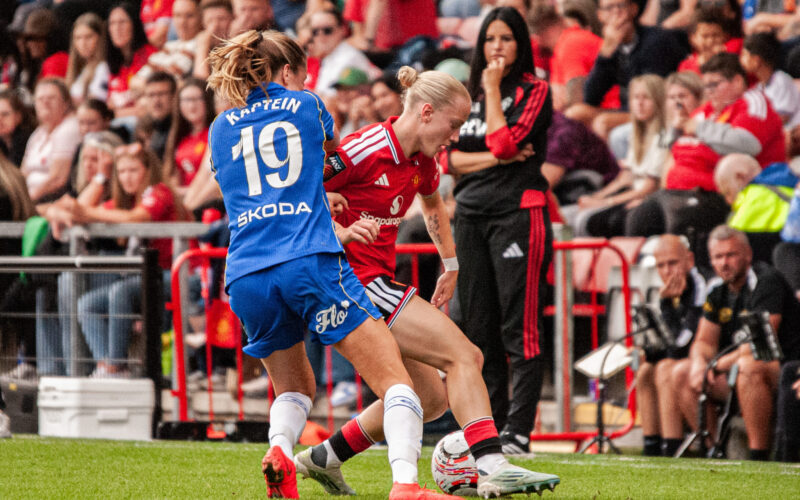
United have been bad. Let’s get that out of the way immediately. They were deservedly beaten 2-1 by London City Lionesses on the opening night, after they were repeatedly suffocated by their press, and then got demolished 5-0 by Chelsea.
There is no need to pretend either performance was acceptable. Olid isn’t exempt from criticism because she’s new. Her insistence on playing through pressure against London City was questionable. Against Chelsea, United looked miles away from the best team in the league.
Criticise all of that, but I’m fascinated by how quickly we’ve gone from criticising the football to examining Eva Olid herself.
I remember Marc Skinner, but more importantly, I remember people talking about him. Fara Williams is the easiest example because fortunately she has left us receipts.
When Skinner departed Manchester United on 3 August, Williams devoted an episode of The Fara Williams Way to his legacy.
Her assessment?
An “unbelievable” managerial career. A “fantastic job.” A manager “punching way above his weight.”
She even gave United supporters the old “careful what you wish for” treatment, and the central argument running through Williams’s defence was perfectly clear.
Context.
United hadn’t properly backed Skinner. The squad wasn’t deep enough. Rivals had greater resources. Big players had been allowed to leave. He couldn’t simply magic replacements into existence.
Williams explicitly argued that she couldn’t see what more Skinner could have achieved with the budget he had been given, and you know what? That’s a legitimate way to analyse a manager.
I don’t necessarily agree with the conclusions she reached about Skinner, but I absolutely agree with the principle because Managers don’t operate in a vacuum.
So imagine my surprise when that extraordinarily sophisticated understanding of structural context appeared to have an expiry date of August 3rd 2026.
Five weeks later, after Eva Olid’s first competitive match, Williams was analysing a Manchester United side which had apparently become considerably easier to judge.
Her own podcast advertised the discussion as Manchester United “looking flat under new management.”
Williams didn’t just say United played badly. She contrasted Olid unfavourably with Skinner, praising Skinner’s adaptability before describing Olid as “very stubborn in her style of play” because they kept trying to play through London City’s press. She called the performance massively disappointing.
After one game.
Now, to be fair to Williams, she did acknowledge that United were low on confidence after a dreadful pre-season and she had already predicted a difficult campaign, but that’s what makes the contrast interesting rather than exonerating it.
Just look at the sheer amount of mitigating context Marc Skinner was afforded. Budget. Squad depth. Recruitment. Departures and the reasons kept coming. The strength of Chelsea, Arsenal and Manchester City, European football, the expectations attached to the Manchester United name.
Five years into the job, all of these things remained relevant when Williams assessed Skinner.
Then Eva Olid got ninety minutes, and we were already discussing whether the problem was a manager who was “very stubborn.” Sorry, but I’m going to notice that.
Particularly because Olid inherited virtually every mitigating circumstance used to defend Skinner, and several of them got worse.
She was appointed only weeks before the season began. Suzanne Wrack noted before the Chelsea game that Olid had had about three weeks to impose an entirely new playing philosophy. Seven players had left, and only four had arrived, with important recruitment conducted late in the window.
That is not an argument that Olid is definitely going to succeed.
It is an argument that, if you spent years telling everyone Manchester United’s manager couldn’t reasonably be judged without accounting for what was happening above him, perhaps the woman who replaced him gets longer than a fortnight before that principle disappears.
Fara Wasn’t Operating in a Vacuum
This is important, because I don’t want to pretend every pundit has already turned on Olid. They haven’t. Anita Asante hasn’t. Lianne Sanderson hasn’t. So I’m not accusing either woman of hypocrisy.
I’m mentioning them because they demonstrate just how extraordinarily sympathetic the media environment around Skinner could be.
In February 2024, with United enduring a deeply disappointing league campaign and supporters displaying Skinner Out banners, Asante wrote that those banners were “unfair because United have over-achieved.” She then asked, “So what more do those fans want?” United eventually finished fifth.
Again, you can agree or disagree with the banners. You can absolutely make an argument about the wider problems at Manchester United.
I appreciate the level of grace being offered here by Asante.
A manager in his third season, following a runners-up campaign and a season in which United ultimately finished fifth, had prominent media voices asking what supporters could expect beyond what he was already delivering.
Lianne Sanderson was still making a similar structural case in December 2025, arguing that United were exceeding expectations under Skinner and needed substantially greater financial backing to compete properly and once again: fine.
If your analysis is that Manchester United’s chronic underinvestment limits what a manager can achieve, that’s coherent. Keep that energy. That’s literally all I’m asking.
Then There’s the BBC
The BBC article published after Sunday’s Chelsea hammering might be the most revealing example of all, precisely because it isn’t some rant from a supporter or an inflammatory podcast clip.
It’s a straight BBC Sport analysis by Adwaidh Rajan.
The headline asks:
“Two games, two defeats – are Olid’s Man Utd in trouble?”
Fair enough. They’ve just lost 5-0. Write the analysis. Then comes a section entitled:
“Is Olid ready for the challenge?”
Two competitive games. Two!
The article notes that Olid is untested in the WSL and Europe and suggests questions will be raised about the appointment if United fail to recover.
Then something wonderful happens, because the article starts talking about Marc Skinner. Suddenly we’re back in context land.
Skinner’s cup success is noted. His top-three finishes. His Champions League run. His frustration over investment. The difficulty of replacing him.
It’s almost beautifully illustrative.
Olid: Are you ready for this job?
Skinner: Let us explain the extremely complicated structural circumstances surrounding his performance.
In the same article.
Rajan isn’t saying Olid should be sacked. That would be an unfair representation of the piece.
My problem is that the question “Is Olid ready for the challenge?” exists at all after 180 minutes when you compare it with years of discussion about why Manchester United’s problems could not simply be laid at Marc Skinner’s door.
Especially when the article itself contains evidence of the disruption Olid is dealing with.
This is Not a Defence of Eva Olid
I really want to underline this, because otherwise somebody will inevitably respond to a completely different argument. I don’t know whether Eva Olid is good enough to manage Manchester United.
Neither do you. That’s the point.
She might be brilliant. She might be completely out of her depth.
Her football might eventually be fantastic. Her determination to play out from the back might prove hopelessly naive against WSL pressing. United might improve rapidly. They might spend the season getting battered.
We’re two games in.
What I do know is that women’s football media spent years teaching us that Manchester United required special context for a whole starting XI of reasons.
The club doesn’t invest enough. Recruitment isn’t good enough. Squad depth matters. Losing important players. Chelsea and Arsenal can spend more. Manchester City have greater resources.
The expectations associated with the badge aren’t necessarily compatible with the resources available to the women’s team.
All true.
None of those things stopped being true because Marc Skinner resigned.
That’s Why I Am Writing This Now
I want the timestamp.
I’m not saying Anita Asante is going to turn around in October and demand that Olid start competing with Chelsea.
I’m not saying Lianne Sanderson will suddenly forget the investment gap she correctly identified under Skinner.
I’m not saying every journalist is doing this. Suzanne Wrack, notably, has explicitly argued for patience, pointing to the late appointment, squad turnover and lack of preparation time.
Good.
That’s consistency.
I’m saying I can already see the beginnings of a different standard, and Fara Williams is currently the clearest example of it.
You cannot spend August explaining that Marc Skinner could only do so much when Manchester United allowed important players to leave, failed to replace them adequately, and gave him fewer resources than his rivals…
…and then get to September and start describing his replacement as tactically stubborn after her first game.
Well, you ca,n but people are allowed to notice.
And perhaps that’s the most important thing here.
United fans have an uneasy relationship with the media and many feel that they get treated differently and they have good reason to.
Many a time, they are judged by a different standard than other clubs. I spoke to one fan who cited Florian Wirtz as an example. Had Wirtz been a Manchester United player, they argued, he would not have escaped the level of scrutiny that his underwhelming form for Liverpool has warranted.
They have also watched their own heroes using various platforms to turn on them at every opportunity. It gets clicks, sells newspapers and, sadly, in the case of Mark Goldbridge, can even help build a career.
For years, WSL media trained Manchester United supporters to consider every mitigating circumstance surrounding Marc Skinner. They trained them, and everyone else, to look beyond results. To look at budgets, recruitment, and squad depth.
In fact, they tried very hard, even in the face of legitimate fan criticism, to look at everything happening around the manager before deciding that the manager himself was the problem.
Okay.
We learned.
So now let’s apply the lesson. We are supposed to be better in the women’s game and not always looking for the next pile-on.
Next weekend Eva Olid gets Arsenal as the next opponent, and you feel like the sharks are already circling.
By all means, analyse her. Question her substitutions. Question the build-up. Question the press. Question why United kept trying to pass their way through London City while being eaten alive.
But if we’re already moving from “this isn’t working” to “is she ready for this?”, I’m going to keep one eye on the people asking the question because we spent five years being told context mattered.
It would be very interesting if it suddenly stopped mattering the moment Marc Skinner walked out of the door.