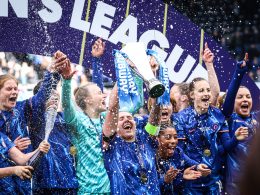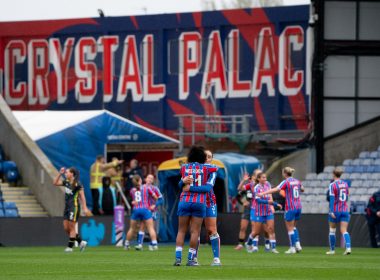
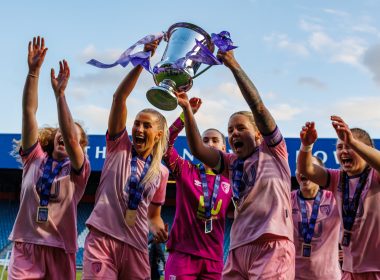
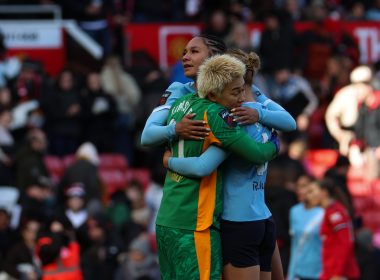
The current iteration of the Women’s League Cup (WLC) was launched in 2011, with Arsenal winning the first three competitions.
Their bid for a four-peat was halted in 2014 by Manchester City in the final in front of a crowd of 3,697 at Adams Park, home of Wycombe Wanderers.
The Origins of the Women’s League Cup
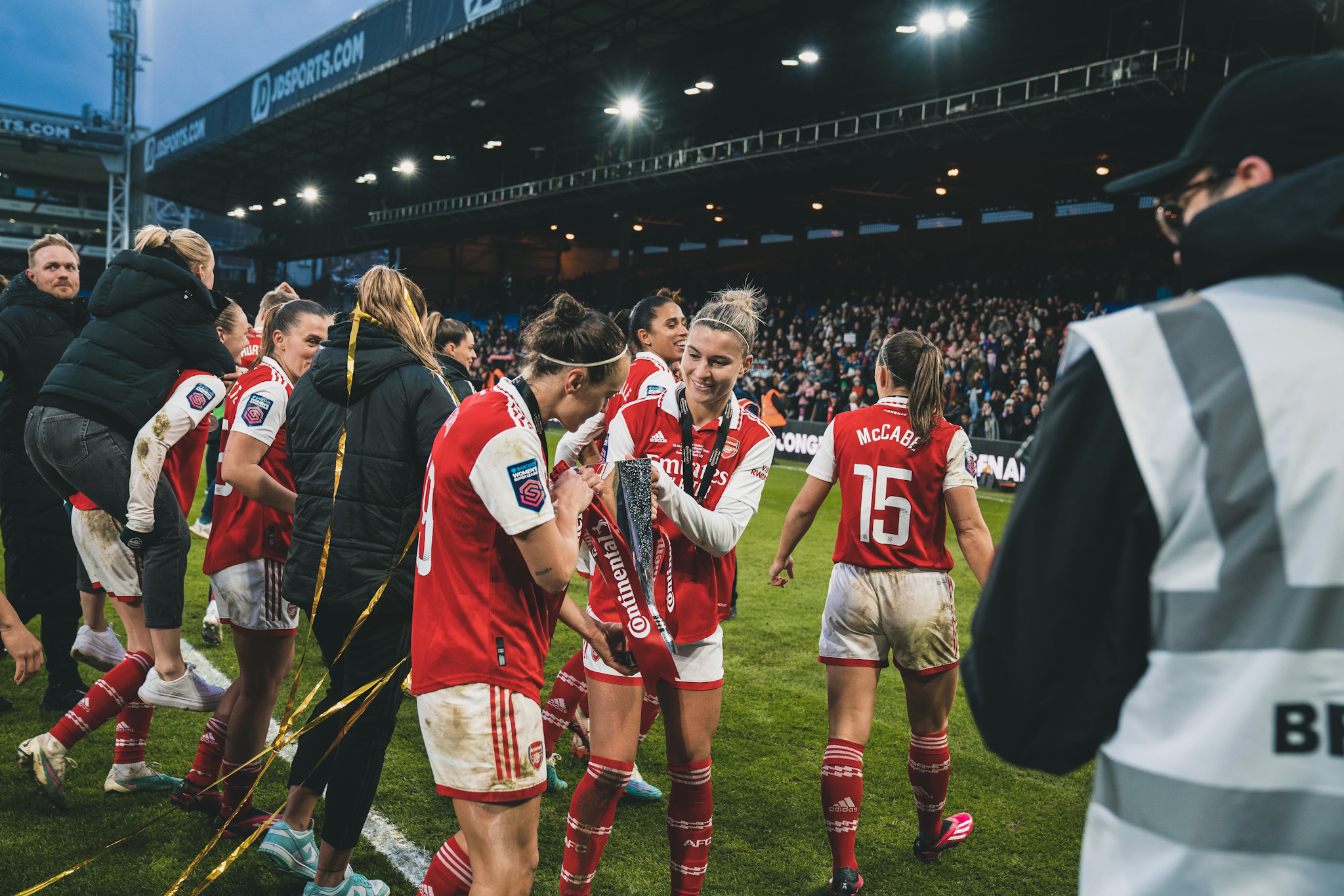
Jumping to 2024, Arsenal defeated Chelsea 1-0 after extra time at Molineux, home of Premier League Wolverhampton Wanderers (not for long, sorry Wolves fans).
The match was witnessed by a record-breaking 21,462 people, the largest WLC attendance at a neutral site.
This represents a 480% increase, highlighting the growing interest in the women’s game, driven in large part by the success of the Lionesses.
However, despite the growth, the competition is not without issues.
From GK Barry desecrating the sacred art of a League Cup quarter and semi finals draw on TikTok Live to the format changing every few years, some challenges need addressing.
With the Women’s League Cup final only days away, it’s worth stating: in my opinion, the WLC has many issues.
Current Challenges Facing the WLC
Fans are growing weary of a competition that often feels like a midweek hindrance rather than a help.
Players are also facing a climate where playing forty to fifty games as a top-level athlete is increasingly expected.
Next season, the WLC will see radical format changes. UWCL teams will be excluded, and the group stage will be replaced by a league stage.
But do these changes address the competition’s core problems?
Thoughts on Format Changes
Excluding UWCL teams has pros and cons.
Pros:
-
Teams in Europe won’t overexert themselves in an already packed season, potentially reducing ACL injuries.
-
UWCL teams won’t automatically enter the Quarter-Finals, which was previously unfair but necessary to accommodate European fixtures.
Cons:
-
Attendance figures may suffer because some of the most popular teams are effectively frozen out.
-
A minor downside is that 2006–07 Arsenal will stand alone as the only women’s club to have won the quadruple (unless a new competition emerges).
A positive is that it guarantees a new winner of the League Cup.
Since 2011, only Arsenal, Man City, and Chelsea have won the competition.
This change gives non-European teams something meaningful to fight for.
Abandoning the Group Stage
Replacing the group stage with a league stage is risky. The group stage is the most familiar format, so changing it may alienate newer viewers.
The league stage could be perceived as the WPLL (the governing body of the top two tiers) copying UEFA’s structure with little differentiation.
However, if implemented correctly, a league stage can create late-season drama, similar to the EFL Championship, League One, and League Two, where stakes and results matter until the last day.
Broadcasting Issues
Broadcasting remains a key problem. Most games are on YouTube, a free platform, but matches that aren’t streamed often vanish or only appear rarely on BBC iPlayer.
Another issue is scheduling: games often occur simultaneously.
For example, both semi-finals were played on January 21st at 7 pm. To watch both, fans would need to stream one on their phone while watching the other on TV, a nearly impossible task.
Potential solutions include staggering kickoff times, such as one match at 3 pm and another at 7 pm, or hosting the games on separate days, as the Women’s FA Cup does.
Inconsistent Competition Format
The WLC format has changed frequently:
-
2011: Straight knockout tournament, similar to the FA Cup.
-
2012: Group stage introduced, with top two teams advancing to the semi-finals.
-
2014: Group stages removed, reverting to knockout format.
-
2015: Quarter-Finals added.
-
2016: Returned to group stage with seeding; WSL 2 teams had home advantage.
-
2017–18: Familiar format adopted.
-
2018–19: Further amendments, with twenty-two teams and a regional focus.
-
2019–20: One extra team added to the Southern region, for a total of twenty-three teams.
The constant changes make it difficult to maintain consistency and identity.
Potential Benefits of the New Format
The combination of a league stage and the exclusion of UWCL teams could improve competitiveness among mid-table WSL sides and top WSL 2 teams.
It may provide smaller teams with meaningful fixtures and a chance to shine, which has been limited in previous formats dominated by Arsenal, Man City, and Chelsea.
Format vs Infrastructure
While the format changes might help the competition thrive, they are not the primary solution.
The real issues lie in the infrastructure: broadcasting, scheduling, and consistency.
Changing the format alone is like painting a light switch to hide defects; it may temporarily work, but long-term success depends on a well-executed, stable structure.
The Women’s League Cup could be a great and entertaining competition, but only if the WPLL executes it properly.
In a perfect world, the WLC would run seamlessly, and fans and players would fully enjoy the experience. Unfortunately, we are not in that world yet.