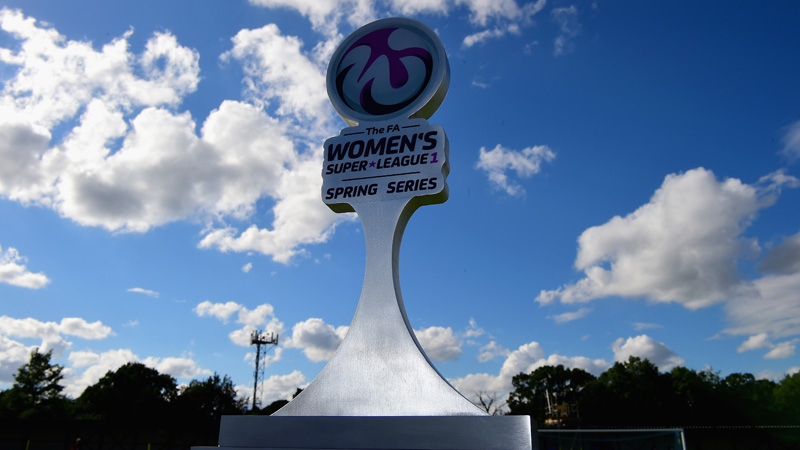
The WSL Spring Series remains one of the most unusual chapters in the history of the Women’s Super League. While the 2016 Summer Series was a modern addition to the calendar, the original 2017 WSL Spring Series served a very different purpose. It was a one-off competition designed to bridge the gap between the WSL’s summer schedule and its transition to a traditional winter season, and in doing so, it helped shape the future of women’s football in England.
As a relatively new WSL fan, the Spring Series isn’t something I can replay from memory match by match. But the more I’ve researched it, the more fascinating it has become. It feels like a season that both existed and didn’t, suspended between the 2016 and 2017–18 campaigns. Almost like a “0.5 season,” it sits just outside the league’s official history while quietly influencing everything that followed.
What Was the WSL Spring Series?
The WSL Spring Series was a one-off competition held between February and May 2017. It was introduced by the FA to bridge the gap as the Women’s Super League moved from a summer calendar to a traditional winter schedule.
Instead of playing a full season, each club faced every other team once in an eight-match campaign. There was no relegation, but there was still a league title to be won, making it one of the most unique competitions English women’s football has ever seen.
Why Did the Women’s Super League Change?
To understand why the WSL Spring Series happened, you have to go back to the league’s origins.
Launched in 2011, the Women’s Super League replaced the FA Women’s Premier League National Division as the top tier of women’s football in England. For its first six seasons, the competition ran during the summer months, deliberately avoiding direct competition with the men’s game for media attention, crowds, and stadium availability.
By 2017, however, that model had become increasingly difficult to sustain. Fixture congestion, stadium access, and the desire to align with the wider European football calendar prompted the FA to move the league to a winter schedule. The challenge was bridging the gap between formats, and the answer was the Spring Series.
The Teams That Competed
Nine clubs took part after Notts County folded just days before the competition began.
The lineup captured the Women’s Super League at a fascinating moment of transition. Arsenal were attempting to re-establish themselves among the elite, with Danielle Carter leading the attack. Birmingham City were building towards an FA Cup Final, while Bristol City had just earned promotion.
Chelsea, under Emma Hayes, were on the verge of a trophy-laden era. Liverpool, managed by the late Matt Beard, boasted attacking talent including Caroline Weir and Natasha Harding. Manchester City entered as reigning WSL champions, while Reading and Sunderland provided strong competition in mid-table. Yeovil Town completed the field after winning WSL 2.
Looking back, it’s a snapshot of a league that was changing rapidly.
A Dramatic Start
The opening weekend immediately delivered plenty of storylines.
Reading defeated Bristol City, Liverpool comfortably beat Yeovil Town 4–1, and Manchester City edged Chelsea 1–0 in the standout fixture. Birmingham City and Sunderland played out a draw.
Arsenal, however, never kicked a ball.
Their scheduled opening fixture against Notts County was cancelled after County’s dramatic collapse, with no points awarded. It was an abrupt and sobering end for a club that had been competing at the highest level only months earlier.
Arsenal’s Incredible 4–4 Draw
When Arsenal finally took to the pitch a week later, they produced arguably the defining match of the entire WSL Spring Series.
Louise Quinn lined up for Arsenal after moving from the now-defunct Notts County, despite her signing not yet having been officially announced. For many supporters, her debut effectively served as her introduction.
Then came the goals.
Alex Greenwood scored directly from a corner—an Olimpico—and the game descended into an extraordinary 4–4 draw. It remains the highest-scoring match of the competition and perfectly encapsulated the unpredictability of the Spring Series itself.
Chelsea’s Path to the Title
As the competition progressed, a genuine title race emerged between Chelsea, Arsenal and Manchester City, with Liverpool remaining within touching distance.
Chelsea’s narrow 1–0 victory over Manchester City, courtesy of Toni Duggan, proved decisive. Arsenal also overcame City thanks to Jordan Nobbs, while Chelsea emphatically ended Liverpool’s hopes with a stunning 7–0 victory before beating Bristol City 4–0.
Heading into the final day, Chelsea held their nerve.
Arsenal finished unbeaten after defeating Bristol City 5–0 but could only finish third. Manchester City beat Birmingham City 3–1, yet it wasn’t enough.
Chelsea were crowned 2017 WSL Spring Series champions, with Karen Carney and Fran Kirby playing starring roles. Kirby finished as the competition’s top scorer with six goals.
WSL 2 and Everton’s Promotion
The WSL 2 Spring Series unfolded alongside the top flight.
It began with Brighton & Hove Albion, featuring a young Alessia Russo, drawing 1–1 with London Bees before ending with Everton finishing top ahead of Doncaster Rovers Belles. Doncaster striker Courtney Sweetman-Kirk claimed the Golden Boot after scoring nine goals in ten matches.
Although both clubs applied for promotion, only Everton were successful.
Notts County’s collapse created an unexpected vacancy in the Women’s Super League, allowing Everton to return to the top flight.
The Lasting Legacy of the WSL Spring Series
I ended up researching the WSL Spring Series after seeing Chelsea celebrate the anniversary of their title-winning campaign.
For years, I’d dismissed it as a “0.5 title” because of its unusual timing and shortened format. After digging deeper, though, I’ve come to appreciate its significance far more.
The Spring Series wasn’t simply a stopgap competition.
It marked the beginning of Chelsea’s dominance under Emma Hayes. The Blues went on to win the following full WSL season before lifting six of the next seven league titles, with players like Fran Kirby and Erin Cuthbert becoming central to one of the greatest teams English women’s football has seen.
Its impact stretched beyond the title race too. Everton’s promotion, made possible by Notts County’s withdrawal, altered the trajectory of the club and helped provide opportunities for future stars such as Ruby Mace, Chloe Kelly and Nathalie Björn. Meanwhile, the WSL 2 competition featured a teenage Alessia Russo, who has since gone on to become one of Europe’s biggest stars.
The WSL Spring Series may have lasted only a few months, but its influence has endured for years. It was an unconventional solution to a logistical problem, yet it quietly shaped the future of the Women’s Super League.
Sometimes the shortest seasons leave the biggest legacy.