


As Women’s football continues to professionalise across Europe and particularly within the Women’s Super League (WSL), increasing attention is being placed not only on tactics and physical performance, but also on the psychological foundations that underpin successful teams.
Team Culture and Collective Resilience
Research into women’s football suggests that success is strongly influenced by team culture, collective resilience, and psychologically safe environments.
These factors shape how players respond to pressure, communicate during adversity, and maintain consistency across demanding seasons.
Challenges of Toxic Environments
However, there have been numerous accounts of clubs struggling with toxic internal environments.
These issues often stem from poor leadership, ineffective coaching practices, and inadequate safeguarding protocols.
Such conditions can undermine trust within squads and negatively impact both well-being and performance.
The Rise of Mental Health Support
Encouragingly, the landscape is beginning to shift.
An increasing number of clubs are now employing sport psychologists whose primary focus is supporting players’ mental well-being and psychological development.
This growing recognition that mindset matters reflects a broader understanding that elite performance is supported not only by physical preparation but also by strong mental foundations.
Diversity as a Strength
Successful teams are rarely defined by homogeneous personalities or identical backgrounds.
Instead, diverse skill sets, experiences, and psychological approaches often contribute to stronger team environments, allowing the squad to adapt to pressure and navigate challenges collectively.
Psychological Factors Linked to Success
Resilience and “Controlling the Controllable”
One of the most significant psychological traits associated with elite women’s football teams is resilience. Players are increasingly encouraged to shift their focus away from fear of failure and towards the idea of “controlling the controllable”.
This approach allows athletes to concentrate on elements within their influence, such as effort, tactical awareness, communication, and preparation, rather than external outcomes.
In high-pressure scenarios, such as penalty shootouts or decisive moments late in matches, this mindset can help players remain calm and composed.
By reframing pressure as an opportunity rather than a threat, teams can transform anxiety into focused performance energy.
Confidence and Self-Belief
Confidence and self-belief are also critical components of performance in women’s football.
Research indicates that national team players and elite-level athletes frequently display higher levels of mental toughness and lower levels of competitive anxiety than those competing in lower divisions.
Confidence allows players to trust their instincts during key moments in matches, make decisive decisions, and execute technical skills under pressure.
Importantly, confidence is rarely an individual attribute alone; it is often strengthened through positive team culture, supportive coaching, and consistent communication within the squad.
Mental Toughness and Psychological Support
Mental toughness has long been viewed as an essential characteristic in elite sport.
However, recent research highlights that resilience and mental toughness must be supported by adequate mental health care and psychological resources.
Without appropriate support structures, players may be at greater risk of burnout, emotional fatigue, or reduced well-being.
Access to sports psychologists, welfare officers, and mental health professionals can therefore play a vital role in maintaining both performance and player wellbeing.
Across women’s football, however, the availability of these support systems remains uneven between clubs, particularly between fully professional teams and those operating with more limited resources.
Social and Environmental Influences on Team Culture
Navigating Historical Marginalisation
Women’s football has developed within a historically male-dominated sporting landscape, and many players continue to navigate environments that have traditionally been underfunded or undervalued.
As a result, the psychological culture within many teams has been shaped by the experience of overcoming marginalisation and structural barriers.
This shared context often strengthens team identity and reinforces a collective sense of purpose.
Advocacy and Collective Identity
Women’s football is frequently intertwined with broader social movements advocating for gender equality, representation, and structural change within sport.
Players, supporters, and organisations often view the growth of the women’s game as part of a wider effort to reshape sporting culture.
This has contributed to the development of team environments that prioritise collective achievement over individual recognition.
In contrast to some traditionally individualised sporting cultures, many women’s teams emphasise community, collaboration, and shared success, fostering a strong sense of kinship among players.
Coaching and Leadership
Empowering Leadership Styles
Leadership approaches within women’s football are increasingly evolving. Rather than relying on traditional authoritarian coaching models, many coaches now adopt empowering leadership styles that emphasise communication, emotional intelligence, and collaboration.
In some cases. Particularly within female-led coaching structures, there can be an added dimension of peer understanding and mentorship, creating a supportive environment where players feel comfortable expressing challenges or concerns.

These approaches encourage players to contribute actively to team discussions, creating a more inclusive and participatory culture.
Transparency and Trust
Transparency is another critical component of successful leadership in women’s football. Clear communication about player roles, expectations, and team objectives helps establish trust between coaching staff and players.
When players have a clear understanding of their responsibilities within the team structure, they can focus more effectively on their performance rather than the uncertainty surrounding selection or tactical expectations.
This clarity also contributes to stronger relationships between players and coaching staff, strengthening the overall team environment.
Psychological Safety and Team Culture
A growing body of research highlights the importance of psychological safety within elite women’s football teams.
Psychological safety refers to an environment in which players feel able to express themselves openly, communicate honestly, and make mistakes without fear of punishment or losing their place in the team.
When psychological safety is present, players are more likely to:
- Communicate openly with teammates and coaches.
- Take tactical risks during matches.
- Learn from mistakes rather than conceal them.
- Support one another during difficult moments.
In several professional environments within the UK women’s game, researchers have identified the emergence of what is sometimes described as a “culture of kindness”.
This culture emphasises empathy, mutual respect, and strong interpersonal relationships, recognising that player wellbeing and high performance are closely interconnected.
Collective Resilience in Women’s Football
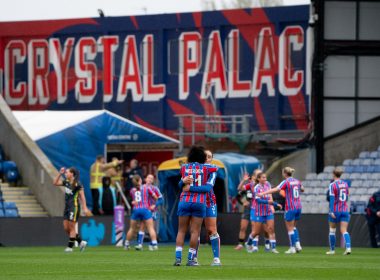
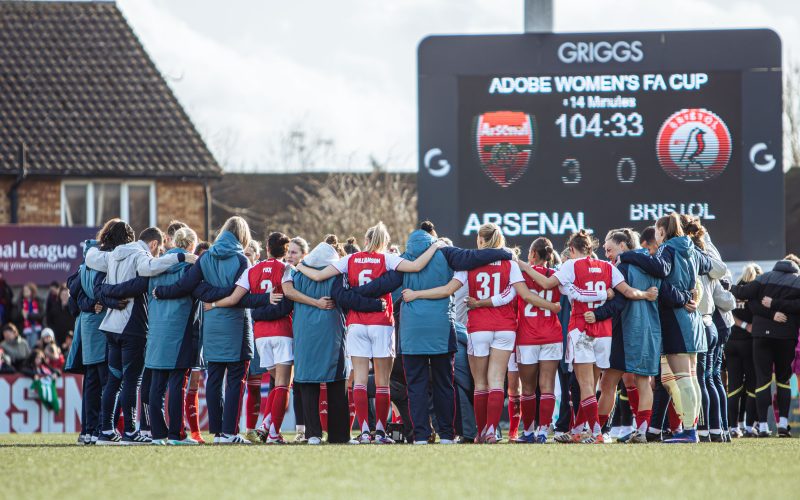
Resilience in women’s football is often understood as a collective team process, rather than purely an individual psychological trait.
Teams frequently demonstrate resilience by adapting together during periods of pressure or adversity. This collective resilience can be observed through several behaviours on the pitch, including:
- Emotional control following setbacks such as conceding goals.
- Positive and proactive communication during difficult moments.
- A willingness to learn from mistakes rather than focus on blame.
- Maintaining tactical discipline under pressure.
These behaviours are often supported by structured psychological preparation, including mental skills training and resilience-building exercises.
Strategies for Developing Resilience
Teams and sport psychologists increasingly implement specific strategies to help players build resilience and cope with pressure.
Cultures of Connection and Kindness
Developing strong interpersonal relationships within squads can act as a powerful stress-reduction mechanism.
When players feel supported by teammates, they are better equipped to handle the emotional demands of competition.
Conclusion
As women’s football continues to grow, understanding the psychology of team culture is becoming increasingly important.
Successful teams are not only built through technical skill and tactical organisation, but also through shared identity, psychological safety, and collective resilience.
By fostering trust, encouraging open communication, and prioritising player wellbeing, teams can create environments that allow athletes to thrive both individually and collectively.
In an evolving sport where expectations and pressures are rising rapidly, the development of strong psychological cultures may ultimately prove to be one of the most significant factors shaping long-term success in women’s football.